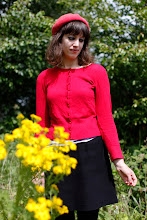
I’ve written and designed a new, very limited-edition publication called He’s Leaving Home: The Shrieking Violet Guide to Hearty Vegetarian Cooking On A Budget. It’s a cookbook for my little brother, who recently left home for the first time, and aims to give ideas for cooking and eating for those who live and eat alone, using everyday ingredients.
The emphasis is on the classic, hearty, simple and solid - think potatoes, pulses, pasta, pies and spices - although unfortunately I've had to leave out anything containing mushrooms or sweet and savoury flavour combinations (both of which I love) as he hates them. The book's also lacking in curries as I felt it was too rich an area to do justice to in this volume ...
I was inspired by a remark that my brother (who really enjoys cooking) made a while ago that he would like to eat less meat and cook more vegetarian food, but lacked inspiration. For ages I planned and thought about writing down all the recipes I make on a regular basis as a birthday present for him. I spent the first few months of this year finally doing that, alongside compiling a list of store cupboard staples I always have in to make sure I am never in the position of having nothing to cook! I have no idea if he'll like or use it, but I find the idea of giving and receiving material goods for the sake of it quite problematic, and would much prefer to share and receive time, interest, ideas and experiences.
Writing it has also been quite a therapeutic and cathartic process. A few of the recipes were developed in collaboration with Daniel Fogarty (baked bean pie and peanut butter jam tarts), and he also introduced me to ground rice pie. I spent last year cooking and cooking and experimenting and experimenting and perfecting recipes, as I was so determined that if only I looked after myself well enough (and ate enough spinach!) I could make myself feel better.
Everything I cook is vegan, but I've purposefully called it 'vegetarian' and used generic words such as 'milk' and 'butter' rather than 'soya milk' and 'vegetable margarine' as I know how alarming some people find the idea of vegan cooking ...
Read online:
A paper copy can be found in Salford Zine Library at Nexus Art Cafe. It’s for my brother, but it’s also for anyone else for whom cooking for one is a chore rather than the pleasure it can and should be.
For optimum results, the recipes should be followed whilst listening to the song 'Bedsitter' from the Soft Cell album Non-Stop Erotic Cabaret, which I have come to regard as one of the high points of 20th century British culture.
BEDSITTER by Soft Cell from paulvernon on Vimeo.
Showing posts with label Recipes. Show all posts
Wednesday, 1 June 2016
He’s Leaving Home: The Shrieking Violet Guide to Hearty Vegetarian Cooking On A Budget
Labels:
1980s,
Blackberries,
Blackberry and apple pie,
Cooking,
Cottage Pie,
Crumble,
Daniel Fogarty,
family,
Fanzines,
Food,
Manchester,
Music,
publishing,
Recipes,
Self-publishing,
Soup,
the 80s,
vegan,
vegetarian,
Zines
Wednesday, 14 August 2013
The Shrieking Violet is 4 — August bank holiday zine launch with music!
The Shrieking Violet zine entered its fourth year at the start of August. This would have coincided with a new issue was it not for a slight hiccup with procuring a cover design! I offer the multi-talented musician and illustrator Dominic Oliver infinite gratitude for stepping in at the last minute and creating this issue's cover image (hear his latest rock 'n' roll supergroup, Fruit Tones, in action at Wahlbar in Fallowfield this Friday!). It seems particularly appropriate as Dom designed the cover for the first two issues of the Shrieking Violet, as well as illustrating the special Shrieking Violet guide to Sounds from the Other City in summer 2010 and contributing various other illustrations over the years. His designs never fail to surprise and delight me.
Read issue 21 online here:
Pick up paper copies at a garden gig in Chorlton on Sunday August 25, which will handily double as a zine launch featuring the best of Bristol's alt-folk scene. Issue 21 contributor Roxy Brennan will make an appearance as Two White Cranes, alongside fellow Bristolians the Nervy Betters and Welsh/Manc weird rocker Llion Swyd. For more information, including times, and contact details for obtaining the exact address, visit http://clockflavour.tumblr.com.
Due to the time and effort involved in photocopying, folding and stapling zines, not to mention the ever-deteriorating quality of copies coming off the machines and a recent price rise from 2p per sheet to 3p per sheet, this issue will be printed with nice, environmentally friendly paper and ink by marc the printers at not much extra cost. Copies are currently on sale for £2 in Piccadilly Records on Oldham Street and in the bookshop at the Cornerhouse on Oxford Street, or at the Working Class Movement Library in Salford (no price, why not make a donation to the Library). Alternatively, download and print your own copy here.
Read issue 21 in Salford Zine Library (currently housed in Nexus Art Cafe, Dale Street, Northern Quarter, Manchester).
In issue 21:
Adrian Slatcher wonders whether memory is being outsourced in our information age and what the consequences of this might be for our self-belief and creativity. Adrian has poetry and fiction in the Rialto, Sculpted: Poetry of the North West and Unthology 4. He blogs at artoffiction.blogspot.com and makes electronic music as Bonbon Experiment.
Roxy Brennan muses about the theme of nature in the sculpture and writing of poet and artist Ian Hamilton Finlay. Roxy is a writer and musician based in Bristol but mostly she works in an art gallery, telling children not to touch things. She is largely interested in Bruce Springsteen and David Foster Wallace, but is discovering that contemporary art is pretty wild too.
Marcus Barnett delves into the story of Maurice 'two guns' Cohen and how he came to his final resting place in Blackley Cemetery. Marcus is twenty-two, graduated from Manchester University with a confusing and ambiguous Combined Studies Department degree in 2012, and holds a certificate in being able to speak a competent Yiddish from Tel Aviv University from a semester there. Since that he has been working in busy kitchens, quiet cafes and the Working Class Movement Library. His main 'things' are post-punk, modernist things (primarily: communism, buildings, progress), reading, and good food, probably in that order.
The Shrieking Violet presents a selection of small images of Manchester life by photographer Joincey. Joincey has a virtually untraceable output of pseudo/anti-music and noise-related sound art/skronk going back twenty years and, as well as playing alone and with other people in bands/groups/combos/projects as Saboteuse, Remedial Queen of England, Puff, Head Effort, Stuckometer and Wheel of Eyes, has fostered a tendency for ultra-amateur photography (mobile phone apps and charity-shop-found 35mm point and shooters almost exclusively) whose themes and stories may be inscrutable or altogether absent. Born and bred in the Potteries, he is resident in Manchester.
Nick Mitchell, founder of Manchester label Golden Lab Records, writes about hero worship and the all-encompassing joy of record collecting and the DIY music scene, as well as contributing a poem to issue 21. Nick was born in 1975 in West Yorkshire and has lived in Manchester since 1999. He works as a writer/poet and musician and has run the label Golden Lab Records since 2005. His poems and short stories have appeared in a number of publications in the UK and US. Hear Nick open for Joshua Burkett at Kraak this evening (Wednesday 14 August), as Chalaque.
James Robinson, a photographer with a penchant for pet portraiture, contributes a selection of photos taken during his recent travels around Southern India in January 2013. Originally from Lincoln, James studied philosophy in Manchester before moving to London where he plays bass for indie band Being There.
Art student Paul Gallagher adds some colour to the Shrieking Violet with his illustration 'Kaspar Hauser'. Paul is influenced by underground comic book artists as well as traditional African, folk art and classic cartoons such as the Simpsons and Beavis and Butthead. His work often uses colour, abstract shapes and patterns and faces. To see more go to http://paulgallagherillustration.tumblr.com.
Writer, curator and academic Rachel Newsome contributes an essay on fashion and androgyny. A former editor of Dazed & Confused magazine, Rachel chose to leave the commercial world of media in order concentrate on writing fiction and essays after nearly a decade in journalism. Since then she has authored the novel As It Was In The Beginning (short-listed for the Dundee International Book Prize) and edited This Is Not A Book About Gavin Turk, a series of essays on contemporary art commissioned at the request of the artist. She writes essays on art and culture as well as dark fables that explore both the dark interior of the human psyche and its search for light. Set against a backdrop of contemporary consumer society, these fables occupy a landscape somewhere between consciousness and dream, and owe a debt to the short stories of Angela Carter and Ben Okri and the fairy tales of Oscar Wilde and Hermann Hesse. Rachel is the Director of Don’t Tell Stories, which curates narrative-based spaces and situations and is a Lecturer in Fashion Styling and Image-Making at The University Of Salford. She is currently writing a series of short stories, What Remains And Other Tales.
Manchester-based artist Cherry Styles often uses photographs of herself and long-time collaborator Christa Harris in her collages; get a flavour of her collage work in this issue of the Shrieking Violet. The pair are currently working on a photo book of Cherry's pictures of Christa taken over the past eight years. See more of her work at www.cherrystyles.co.uk.
This issue also features poetry by Kenn Taylor, a writer and journalist from Merseyside who now lives in London. He has a particular interest in the relationship between community, culture and the urban environment.
Manchester-based filmmaker Richard Howe continues his series on mental health in the movies by looking at Woody Allen's best film of the nineties, Deconstructing Harry. Help Richard by voting for his surreal comedy film Dream Bubble at www.virginmediashorts.co.uk/film/4664/dream-bubble#.UfKdcWC1Zc9 and tweet him about films @rikurichard.
This edition's recipe, Spanish stuffed cabbage leaves, comes from vegetarian blogger and aspiring cafe owner Paul Barrett. Paul blogs about the joys of vegetarian parenting and the path he is taking to get a vegetarian cafe up and running in the North West. He aims to open a new cafe in New Mills in Derbyshire in the autumn.
Read issue 21 online here:
Pick up paper copies at a garden gig in Chorlton on Sunday August 25, which will handily double as a zine launch featuring the best of Bristol's alt-folk scene. Issue 21 contributor Roxy Brennan will make an appearance as Two White Cranes, alongside fellow Bristolians the Nervy Betters and Welsh/Manc weird rocker Llion Swyd. For more information, including times, and contact details for obtaining the exact address, visit http://clockflavour.tumblr.com.
Due to the time and effort involved in photocopying, folding and stapling zines, not to mention the ever-deteriorating quality of copies coming off the machines and a recent price rise from 2p per sheet to 3p per sheet, this issue will be printed with nice, environmentally friendly paper and ink by marc the printers at not much extra cost. Copies are currently on sale for £2 in Piccadilly Records on Oldham Street and in the bookshop at the Cornerhouse on Oxford Street, or at the Working Class Movement Library in Salford (no price, why not make a donation to the Library). Alternatively, download and print your own copy here.
Read issue 21 in Salford Zine Library (currently housed in Nexus Art Cafe, Dale Street, Northern Quarter, Manchester).
In issue 21:
Adrian Slatcher wonders whether memory is being outsourced in our information age and what the consequences of this might be for our self-belief and creativity. Adrian has poetry and fiction in the Rialto, Sculpted: Poetry of the North West and Unthology 4. He blogs at artoffiction.blogspot.com and makes electronic music as Bonbon Experiment.
Roxy Brennan muses about the theme of nature in the sculpture and writing of poet and artist Ian Hamilton Finlay. Roxy is a writer and musician based in Bristol but mostly she works in an art gallery, telling children not to touch things. She is largely interested in Bruce Springsteen and David Foster Wallace, but is discovering that contemporary art is pretty wild too.
Marcus Barnett delves into the story of Maurice 'two guns' Cohen and how he came to his final resting place in Blackley Cemetery. Marcus is twenty-two, graduated from Manchester University with a confusing and ambiguous Combined Studies Department degree in 2012, and holds a certificate in being able to speak a competent Yiddish from Tel Aviv University from a semester there. Since that he has been working in busy kitchens, quiet cafes and the Working Class Movement Library. His main 'things' are post-punk, modernist things (primarily: communism, buildings, progress), reading, and good food, probably in that order.
The Shrieking Violet presents a selection of small images of Manchester life by photographer Joincey. Joincey has a virtually untraceable output of pseudo/anti-music and noise-related sound art/skronk going back twenty years and, as well as playing alone and with other people in bands/groups/combos/projects as Saboteuse, Remedial Queen of England, Puff, Head Effort, Stuckometer and Wheel of Eyes, has fostered a tendency for ultra-amateur photography (mobile phone apps and charity-shop-found 35mm point and shooters almost exclusively) whose themes and stories may be inscrutable or altogether absent. Born and bred in the Potteries, he is resident in Manchester.
Nick Mitchell, founder of Manchester label Golden Lab Records, writes about hero worship and the all-encompassing joy of record collecting and the DIY music scene, as well as contributing a poem to issue 21. Nick was born in 1975 in West Yorkshire and has lived in Manchester since 1999. He works as a writer/poet and musician and has run the label Golden Lab Records since 2005. His poems and short stories have appeared in a number of publications in the UK and US. Hear Nick open for Joshua Burkett at Kraak this evening (Wednesday 14 August), as Chalaque.
James Robinson, a photographer with a penchant for pet portraiture, contributes a selection of photos taken during his recent travels around Southern India in January 2013. Originally from Lincoln, James studied philosophy in Manchester before moving to London where he plays bass for indie band Being There.
Art student Paul Gallagher adds some colour to the Shrieking Violet with his illustration 'Kaspar Hauser'. Paul is influenced by underground comic book artists as well as traditional African, folk art and classic cartoons such as the Simpsons and Beavis and Butthead. His work often uses colour, abstract shapes and patterns and faces. To see more go to http://paulgallagherillustration.tumblr.com.
Writer, curator and academic Rachel Newsome contributes an essay on fashion and androgyny. A former editor of Dazed & Confused magazine, Rachel chose to leave the commercial world of media in order concentrate on writing fiction and essays after nearly a decade in journalism. Since then she has authored the novel As It Was In The Beginning (short-listed for the Dundee International Book Prize) and edited This Is Not A Book About Gavin Turk, a series of essays on contemporary art commissioned at the request of the artist. She writes essays on art and culture as well as dark fables that explore both the dark interior of the human psyche and its search for light. Set against a backdrop of contemporary consumer society, these fables occupy a landscape somewhere between consciousness and dream, and owe a debt to the short stories of Angela Carter and Ben Okri and the fairy tales of Oscar Wilde and Hermann Hesse. Rachel is the Director of Don’t Tell Stories, which curates narrative-based spaces and situations and is a Lecturer in Fashion Styling and Image-Making at The University Of Salford. She is currently writing a series of short stories, What Remains And Other Tales.
Manchester-based artist Cherry Styles often uses photographs of herself and long-time collaborator Christa Harris in her collages; get a flavour of her collage work in this issue of the Shrieking Violet. The pair are currently working on a photo book of Cherry's pictures of Christa taken over the past eight years. See more of her work at www.cherrystyles.co.uk.
This issue also features poetry by Kenn Taylor, a writer and journalist from Merseyside who now lives in London. He has a particular interest in the relationship between community, culture and the urban environment.
Manchester-based filmmaker Richard Howe continues his series on mental health in the movies by looking at Woody Allen's best film of the nineties, Deconstructing Harry. Help Richard by voting for his surreal comedy film Dream Bubble at www.virginmediashorts.co.uk/film/4664/dream-bubble#.UfKdcWC1Zc9 and tweet him about films @rikurichard.
This edition's recipe, Spanish stuffed cabbage leaves, comes from vegetarian blogger and aspiring cafe owner Paul Barrett. Paul blogs about the joys of vegetarian parenting and the path he is taking to get a vegetarian cafe up and running in the North West. He aims to open a new cafe in New Mills in Derbyshire in the autumn.
Labels:
Art,
Fanzines,
Fashion,
Film,
Food,
garden gigs,
History,
house gigs,
Illustration,
Manchester,
Music,
New Mills,
Peak District,
Photography,
Poetry,
Recipes,
Sculpture,
social history,
vegan,
Zines
Monday, 18 February 2013
The Shrieking Violet issue 20
After a hiatus of six months or so whilst life got in the way, the Shrieking Violet has finally reached issue 20.
Issue 20's cover is by Manchester-based freelance illustrator and designer Catherine Chialton. Her work is generally inspired by science, nature and food, and is split between using ink and vectors. Continuing Catherine's normal linear and patterned aesthetic, this piece was inspired by the usually grim Manchester weather, but with a brighter finish to it.
Manchester-based filmmaker Richard Howe continues his series on mental health in the movies by looking at Betty Blue, which he fell in love with at the tender age of nine. Check out Richard's films at https://vimeo.com/18599252, www.youtube.com/watch?v=hhye0hzz72Q and www.youtube.com/watch?v=Qj6H_eCz_4s and tweet Richard about films @rikurichard.
Artist, writer and arts administrator Jack Welsh has contributed an article about old and new public artworks by Eduardo Paolozzi and Daniel Buren in Tottenham Court Road tube station, London, which has been undergoing extensive renovation. Jack is based in Liverpool, but frequently works in Manchester. He recently completed a Masters in Arts Management, Policy and Practice at the University of Manchester. His dissertation, examining how the Art on the Underground programme contributes to the economic development of London, is part of a longstanding research interest in the role of art and design in underground transport networks.
Joe Austin writes in praise of twentieth century artist Frank Dobson, sometimes referred to as the first truly British Modern sculptor. His interest was sparked by the discovery of a sculpture by Dobson in his local park. Joe is a qualified architect, originally from the Midlands but a naturalised Londoner for the last 23 years or so. Joe's interests are wide (his blog best illustrates his scattergun mind), but generally revolve around writing, design, architecture, art, culture and history. He likes nothing better than learning new aspects of things he thought he knew about.
Midlands-based writer, musician and occasional wrestler JT Wilson has written about the Mystery Castle, a folly in the Arizona desert. JT first heard about the Mystery Castle while researching his forthcoming novel (about cryptozoology, love and other animals). He shares the hero's fondness for grandiloquent gestures, but not his architectural talent. Say hello to JT @jt_stories.
Sam Lewis, a London-based musician, and occasional music writer, interviewed Michael Azzerad, author of Our Band Could be Your Life, as part of his Master's dissertation on how technology affects music. Listen to Being There at http://beingthere.bandcamp.com.
Freelance illustrator Fuchsia MacAree has contributed two drawings, one of Queen Victoria and her border collie, and one repeat pattern originally created for a fundraising Movember exhibition. After degrees in graphic design and illustration, she is now doing a year-long residency in Dublin.
Rebecca Willmott has written a children's story about the January Blues, hoping this will become a longer story in time. Rebecca graduated from Manchester Metropolitan University in 2011, specialising in Children's Literature in her final year. The story shows how baking (in particular, gingerbread men) brings the two characters together whilst mourning a great loss. It is influenced by the Shrieking Violet and Rebecca's many culinary experiments. Rebecca also submitted a gingerbread man recipe for the Shrieking Violet's third issue.
Richard Bilsborough, who has spent the past 14 years being told he should take up cookery, has contributed a recipe for pork, barley and apple stew. He is from Preston, plays guitar for a band called Fighting and has a very dull administrative job.
Valentina OrrĂ¹ has recently completed a MA in Arts Management, Policy and Practice at the University of Manchester, researching urban regeneration and cultural planning. In love with Manchester and with a passion for cities, cultures and travelling, she loves discovering new worlds without forgetting her origins. Valentina is very pleased to contribute a traditional recipe from her Italian region of origin Sardinia, translated into the Sardinian dialect of her home village Mogoro, to this edition of the Shrieking Violet.
Read issue 20 online here:
Download and print your own copy as a PDF here. To request a free paper copy email your name and address to Natalie.rose.bradbury@googlemail.com.
I have been asked to do a guest lecture about self-publishing and the Shrieking Violet blog/zine for undergraduate students on Manchester Metropolitan University's interdisciplinary Unit X in April.
Read about issue 20 of the Shrieking Violet on Creative Tourist here.
Issue 20's cover is by Manchester-based freelance illustrator and designer Catherine Chialton. Her work is generally inspired by science, nature and food, and is split between using ink and vectors. Continuing Catherine's normal linear and patterned aesthetic, this piece was inspired by the usually grim Manchester weather, but with a brighter finish to it.
Manchester-based filmmaker Richard Howe continues his series on mental health in the movies by looking at Betty Blue, which he fell in love with at the tender age of nine. Check out Richard's films at https://vimeo.com/18599252, www.youtube.com/watch?v=hhye0hzz72Q and www.youtube.com/watch?v=Qj6H_eCz_4s and tweet Richard about films @rikurichard.
Artist, writer and arts administrator Jack Welsh has contributed an article about old and new public artworks by Eduardo Paolozzi and Daniel Buren in Tottenham Court Road tube station, London, which has been undergoing extensive renovation. Jack is based in Liverpool, but frequently works in Manchester. He recently completed a Masters in Arts Management, Policy and Practice at the University of Manchester. His dissertation, examining how the Art on the Underground programme contributes to the economic development of London, is part of a longstanding research interest in the role of art and design in underground transport networks.
Joe Austin writes in praise of twentieth century artist Frank Dobson, sometimes referred to as the first truly British Modern sculptor. His interest was sparked by the discovery of a sculpture by Dobson in his local park. Joe is a qualified architect, originally from the Midlands but a naturalised Londoner for the last 23 years or so. Joe's interests are wide (his blog best illustrates his scattergun mind), but generally revolve around writing, design, architecture, art, culture and history. He likes nothing better than learning new aspects of things he thought he knew about.
Midlands-based writer, musician and occasional wrestler JT Wilson has written about the Mystery Castle, a folly in the Arizona desert. JT first heard about the Mystery Castle while researching his forthcoming novel (about cryptozoology, love and other animals). He shares the hero's fondness for grandiloquent gestures, but not his architectural talent. Say hello to JT @jt_stories.
Sam Lewis, a London-based musician, and occasional music writer, interviewed Michael Azzerad, author of Our Band Could be Your Life, as part of his Master's dissertation on how technology affects music. Listen to Being There at http://beingthere.bandcamp.com.
Freelance illustrator Fuchsia MacAree has contributed two drawings, one of Queen Victoria and her border collie, and one repeat pattern originally created for a fundraising Movember exhibition. After degrees in graphic design and illustration, she is now doing a year-long residency in Dublin.
Rebecca Willmott has written a children's story about the January Blues, hoping this will become a longer story in time. Rebecca graduated from Manchester Metropolitan University in 2011, specialising in Children's Literature in her final year. The story shows how baking (in particular, gingerbread men) brings the two characters together whilst mourning a great loss. It is influenced by the Shrieking Violet and Rebecca's many culinary experiments. Rebecca also submitted a gingerbread man recipe for the Shrieking Violet's third issue.
Richard Bilsborough, who has spent the past 14 years being told he should take up cookery, has contributed a recipe for pork, barley and apple stew. He is from Preston, plays guitar for a band called Fighting and has a very dull administrative job.
Valentina OrrĂ¹ has recently completed a MA in Arts Management, Policy and Practice at the University of Manchester, researching urban regeneration and cultural planning. In love with Manchester and with a passion for cities, cultures and travelling, she loves discovering new worlds without forgetting her origins. Valentina is very pleased to contribute a traditional recipe from her Italian region of origin Sardinia, translated into the Sardinian dialect of her home village Mogoro, to this edition of the Shrieking Violet.
Read issue 20 online here:
Download and print your own copy as a PDF here. To request a free paper copy email your name and address to Natalie.rose.bradbury@googlemail.com.
I have been asked to do a guest lecture about self-publishing and the Shrieking Violet blog/zine for undergraduate students on Manchester Metropolitan University's interdisciplinary Unit X in April.
Read about issue 20 of the Shrieking Violet on Creative Tourist here.
Saturday, 16 February 2013
The Shrieking Violet rice pudding
I recently started a PhD, and during two weeks training in how to be a research student we had a session on time management (we were mainly told fairly obvious things like 'checking your Facebook page will not help you with your research'). One of the things we had to do during this session was to think of five things we could not live without. I decided that without food, sleep, fresh air and exercise (getting out for a walk every day, even if it's only just to the shops), and having time to spend by myself and having time to spend with other people with whom I have things in common, I would quickly get very miserable and find it hard to function. We were then asked to narrow our choices down to the two most important (food and sleep for me) and finally pick the one thing we really couldn't live without. Whilst I was trying to choose between food and sleep, it turned out everyone else was thinking about things like their family and their pets.
However, I don't think it's possible to overstate the importance of food in my life, not just as sustenance but also as a way of experiencing experimentation, adventure, comfort and familiarity. I feel like thinking about what I am going to eat, where I am going to get the ingredients from, and how I am going to cook them, gives my days and weeks structure, as well as something to look forward to, and I hope that however busy I became I would still have time to cook for myself. As well as trying out new recipes, I also love making old favourites. Strangely enough, I had never made rice pudding until recently, but it is a great dish as it pretty much looks after itself – once you have put the ingredients in the oven you can just leave them for a couple of hours until it's ready. I'm not a big eater of desserts, so I tend to make it into a main meal, or eat it cold for breakfast. I've also started making sure I have a pomegranate around (they are fairly cheap on the fruit and vegetable stall on High Street in the Northern Quarter and, once deseeded, last in the fridge for several days) as their seeds can be added to any number of dishes, sweet and savoury (see also the Shrieking Violet porridge recipe below, and an aubergine, walnut, pomegranate seed and brown rice salad I invented recently).
On one of the occasions I made rice pudding for a communal dinner lately, my friend Lauren Velvick commented that she would love to make rice pudding but didn't know where to buy pudding rice. It was her birthday last weekend, so I made her a 'rice pudding kit' based on the ingredients and recipe below.
The Shrieking Violet rice pudding
Ingredients
100g pudding rice
50g sugar
700ml soya milk (or other type of milk. I really want to try using coconut milk from a can but have not got round to trying it yet)
Freshly grated nutmeg
1 bayleaf
5-6 cardamon pods
½ of one pomegranate (seeds)
Serves 2
Method
Pre-heat oven to 150 degrees celsius. Grease a large oven dish. Wash and drain rice and add to dish. Add sugar and milk and stir. Grate in a generous amount of nutmeg and add the bay leaf and cardamon pods. Cook for two hours until the rice has reached the desired consistency (I like mine quite runny). Remove from the oven, remove the bayleaf and cardamon pods (if wished), stir in the pomegranate seeds and serve.
The Shrieking Violet porridge
I never used to be a great porridge eater (it’s the stodgiest food I know of, but strangely, and contrary to popular myth that it will keep you full until lunchtime, I’m always ravenous again an hour or two after eating it), but I have found myself eating it a lot in the winter mornings as it’s relatively warm, quick and convenient. As a savoury aficionado, I’m also not a big fruit eater (perhaps because I’ve never been much of a snacks or desserts person) and fruity porridge is also my way of feeling like I’m doing my bit to keep my diet varied and vitamin-filled.
My main complaint about porridge is that it’s often runny or bland (unlike rice pudding, which I prefer runny), but I get around that by cooking it until all the liquid is absorbed and making as much of a meal out of it as possible. Using up some leftover desiccated coconut and chopped nuts one day was inspired, if I say so myself, as it lends the porridge some crunchiness; further ammunition against the blandness!
Ingredients
50-70g porridge oats
½ cup soya milk or water
½ pomegranate (seeds only)
1 apple (or peach/nectarine or plum), chopped
1.5cm ginger, chopped or grated in while the porridge is cooking
½ teaspoon cinnamon and/or ground ginger
½ teaspoon golden syrup or honey
Desiccated coconut or chopped hazelnuts
Serves 1
Method
Heat milk/water in a large pan. Add chopped fruit and simmer for 5-10 minutes depending on how much time you’ve got and how soft you like your fruit. Once fruit has softened, stir in oats, adding more liquid if required. Stir in ginger and cinnamon and sprinkle liberally with coconut/nuts. Keep stirring until porridge has reached desired consistency (up to a couple of minutes). Remove from the heat, stir in pomegranate seeds and serve in a bowl with a teaspoon of golden syrup or honey.
However, I don't think it's possible to overstate the importance of food in my life, not just as sustenance but also as a way of experiencing experimentation, adventure, comfort and familiarity. I feel like thinking about what I am going to eat, where I am going to get the ingredients from, and how I am going to cook them, gives my days and weeks structure, as well as something to look forward to, and I hope that however busy I became I would still have time to cook for myself. As well as trying out new recipes, I also love making old favourites. Strangely enough, I had never made rice pudding until recently, but it is a great dish as it pretty much looks after itself – once you have put the ingredients in the oven you can just leave them for a couple of hours until it's ready. I'm not a big eater of desserts, so I tend to make it into a main meal, or eat it cold for breakfast. I've also started making sure I have a pomegranate around (they are fairly cheap on the fruit and vegetable stall on High Street in the Northern Quarter and, once deseeded, last in the fridge for several days) as their seeds can be added to any number of dishes, sweet and savoury (see also the Shrieking Violet porridge recipe below, and an aubergine, walnut, pomegranate seed and brown rice salad I invented recently).
On one of the occasions I made rice pudding for a communal dinner lately, my friend Lauren Velvick commented that she would love to make rice pudding but didn't know where to buy pudding rice. It was her birthday last weekend, so I made her a 'rice pudding kit' based on the ingredients and recipe below.
The Shrieking Violet rice pudding
Ingredients
100g pudding rice
50g sugar
700ml soya milk (or other type of milk. I really want to try using coconut milk from a can but have not got round to trying it yet)
Freshly grated nutmeg
1 bayleaf
5-6 cardamon pods
½ of one pomegranate (seeds)
Serves 2
Method
Pre-heat oven to 150 degrees celsius. Grease a large oven dish. Wash and drain rice and add to dish. Add sugar and milk and stir. Grate in a generous amount of nutmeg and add the bay leaf and cardamon pods. Cook for two hours until the rice has reached the desired consistency (I like mine quite runny). Remove from the oven, remove the bayleaf and cardamon pods (if wished), stir in the pomegranate seeds and serve.
The Shrieking Violet porridge
I never used to be a great porridge eater (it’s the stodgiest food I know of, but strangely, and contrary to popular myth that it will keep you full until lunchtime, I’m always ravenous again an hour or two after eating it), but I have found myself eating it a lot in the winter mornings as it’s relatively warm, quick and convenient. As a savoury aficionado, I’m also not a big fruit eater (perhaps because I’ve never been much of a snacks or desserts person) and fruity porridge is also my way of feeling like I’m doing my bit to keep my diet varied and vitamin-filled.
My main complaint about porridge is that it’s often runny or bland (unlike rice pudding, which I prefer runny), but I get around that by cooking it until all the liquid is absorbed and making as much of a meal out of it as possible. Using up some leftover desiccated coconut and chopped nuts one day was inspired, if I say so myself, as it lends the porridge some crunchiness; further ammunition against the blandness!
Ingredients
50-70g porridge oats
½ cup soya milk or water
½ pomegranate (seeds only)
1 apple (or peach/nectarine or plum), chopped
1.5cm ginger, chopped or grated in while the porridge is cooking
½ teaspoon cinnamon and/or ground ginger
½ teaspoon golden syrup or honey
Desiccated coconut or chopped hazelnuts
Serves 1
Method
Heat milk/water in a large pan. Add chopped fruit and simmer for 5-10 minutes depending on how much time you’ve got and how soft you like your fruit. Once fruit has softened, stir in oats, adding more liquid if required. Stir in ginger and cinnamon and sprinkle liberally with coconut/nuts. Keep stirring until porridge has reached desired consistency (up to a couple of minutes). Remove from the heat, stir in pomegranate seeds and serve in a bowl with a teaspoon of golden syrup or honey.
Labels:
Food,
fruit,
pomegranate,
Porridge,
Recipes,
rice,
rice pudding,
vegan,
vegetarian,
Winter
Monday, 17 September 2012
The Shrieking Violet on A Wondrous Space
The Shrieking Violet has been asked to guest-curate a page called A Wondrous Space for a week as part of the Northern Spirit theatre project, which celebrates life in the north.
I am the third in a series of guest bloggers drawn from Sheffield, Manchester, Liverpool and Newcastle, and I have chosen to focus on my favourite northern food experiences; namely pie, peas, and more pie. I have contributed recipes for Eccles cakes and blackberry buns, together with a mini-celebration of Eccles the town.
My posts will appear this week, starting on Monday 17 September.
Read each curator's posts at http://northernspirit.org.uk/category/a-wondrous-space.
Find out more about the project on the Guardian blog The Northerner.
I am the third in a series of guest bloggers drawn from Sheffield, Manchester, Liverpool and Newcastle, and I have chosen to focus on my favourite northern food experiences; namely pie, peas, and more pie. I have contributed recipes for Eccles cakes and blackberry buns, together with a mini-celebration of Eccles the town.
My posts will appear this week, starting on Monday 17 September.
Read each curator's posts at http://northernspirit.org.uk/category/a-wondrous-space.
Find out more about the project on the Guardian blog The Northerner.
Wednesday, 1 August 2012
The Shrieking Violet issue 19 (and third birthday party!)
The Shrieking Violet is three, and issue 19, a bumper edition, can be read online now! The printed version, printed by marc the printers (b/w with f/c cover) will be launched at a special birthday party at Atelier[zero], Manchester's pop-up canalside Olympic village, at 2pm on Saturday August 11. Come along for rowing boats, a ball pool, a 'library with no books', purple (Angel Meadows blackberries) cake and more! Event invitation.
This edition's cover is by Hannah Bitowski, who lives and works in Liverpool and is based in artist-led gallery the Royal Standard. She works in a variety of media, with a penchant for screen-printing and mask-making. This illustration was inspired by a selection of themes Hannah currently draws from: masks, the abstraction of portraiture, facial geometry and the cosmos – particularly inspired by Johannes Kepler, a 17th century mathematician and astronomer who was infatuated with the idea of God existing in geometry, with all answers of the universe coming from there. Even though his theory of the platonic solid solar system was wrong, Hannah thinks the theory in itself, and his attempt to fit geometry into all things, great and small, is enough to warrant praise. This piece attempts to merge the similarities between ritual and reality, myth with maths.
Here's what you'll find inside:
Manchester-based filmmaker Richard Howe continues his series on mental health in the movies by looking at Jesus' Son, directed by Alison Maclean. Richard is currently editing the film Realitease, which touches on mental health. Watch the teaser at https://vimeo.com/45743438 and tweet Richard about films @rikurichard.
I visited the National Football Museum to find out how it compares to Urbis, and see what it has to offer a non-sports fan.
Anouska Smith, a crafter and maker with a beady eye for sparkly things at www.junkieloversboutique.com, offers a guide to her favourite Manchester tea-places. Spot her somewhere in the Manchester suburbs finishing up those cups of tea or trying to avoid the puddles on the side of the road.
Simon Sheppard has contributed an article about a very eccentric fellow named Pierre Baume. Following a career change, allowing him to indulge his passion for modern history, Simon qualified from Liverpool University as an Archivist in 2008 having previously gaining a BA Hons in History from UCLAN. Simon hails from Bolton, but is currently living in Manchester, where he spends his spare time partaking in his new ‘hobby’, Real Ale. To accompany Simon's article, Manchester-based illustrator, musician and DJ Dominic Oliver has imagined what Baume might have looked like...
Liverpool-based writer and journalist Kenn Taylor, who has a particular interest in the relationship between culture and the urban environment, considers some of the implications of the privatisation and fragmentation of our railway system.
James Robinson is a photographer and dabbling videographer. He studied philosophy in Manchester and now lives in London, where he plays bass for indie pop-rock band Being There. James is very proud to provide the Shrieking Violet with its first animal feature. The title, Perros y gatos, was inspired by a sticker album he bought on a school trip to Spain.
Joe Austin has written a tribute to three post-war murals in London and Coventry, by Dorothy Annan, Gordon Cullen and William Mitchell, and highlights the often-uncertain future of public artworks like these. Joe is a qualified architect, originally from the Midlands but a naturalised Londoner for the last 22 years or so. Joe's interests are wide (his blog best illustrates his scattergun mind), but generally revolve around writing, design, architecture, art, culture and history.
Liz Buckley has reviewed Stanya Kahn's exhibition It's Cool, I'm Good in the Cornerhouse galleries. Liz is an Art History graduate living in Salford, and will be starting an MA in Gallery Studies in September at Manchester University.
Godfrey is a rough excerpt from a novel by Matthew Duncan Taylor that may or may not be published next year. Matthew is a journalist who currently works for the Winsford and Crewe Guardian newspapers. He plays in the south Manchester-based bands Former Bullies and Great Grand Suns. Some short stories he has written can be found at matthewduncantaylor.blogspot.co.uk.
Sarah Hill is a Manchester-based artist, and the founder and creative director of Video Jam. Sarah has written an introduction to the project. If you are interested in getting involved, contact her at sarahfrhill@gmail.com.
Issue 19 finishes with a recipe for delicious apricot and poppy seed bread from Shrieking Violet favourite Bakerie in the Northern Quarter.
To request a copy in the post (free) or to contribute to future editions email Natalie.Rose.Bradbury@googlemail.com or join the Shrieking Violet Facebook group.
This edition's cover is by Hannah Bitowski, who lives and works in Liverpool and is based in artist-led gallery the Royal Standard. She works in a variety of media, with a penchant for screen-printing and mask-making. This illustration was inspired by a selection of themes Hannah currently draws from: masks, the abstraction of portraiture, facial geometry and the cosmos – particularly inspired by Johannes Kepler, a 17th century mathematician and astronomer who was infatuated with the idea of God existing in geometry, with all answers of the universe coming from there. Even though his theory of the platonic solid solar system was wrong, Hannah thinks the theory in itself, and his attempt to fit geometry into all things, great and small, is enough to warrant praise. This piece attempts to merge the similarities between ritual and reality, myth with maths.
Here's what you'll find inside:
Manchester-based filmmaker Richard Howe continues his series on mental health in the movies by looking at Jesus' Son, directed by Alison Maclean. Richard is currently editing the film Realitease, which touches on mental health. Watch the teaser at https://vimeo.com/45743438 and tweet Richard about films @rikurichard.
I visited the National Football Museum to find out how it compares to Urbis, and see what it has to offer a non-sports fan.
Anouska Smith, a crafter and maker with a beady eye for sparkly things at www.junkieloversboutique.com, offers a guide to her favourite Manchester tea-places. Spot her somewhere in the Manchester suburbs finishing up those cups of tea or trying to avoid the puddles on the side of the road.
Simon Sheppard has contributed an article about a very eccentric fellow named Pierre Baume. Following a career change, allowing him to indulge his passion for modern history, Simon qualified from Liverpool University as an Archivist in 2008 having previously gaining a BA Hons in History from UCLAN. Simon hails from Bolton, but is currently living in Manchester, where he spends his spare time partaking in his new ‘hobby’, Real Ale. To accompany Simon's article, Manchester-based illustrator, musician and DJ Dominic Oliver has imagined what Baume might have looked like...
Liverpool-based writer and journalist Kenn Taylor, who has a particular interest in the relationship between culture and the urban environment, considers some of the implications of the privatisation and fragmentation of our railway system.
James Robinson is a photographer and dabbling videographer. He studied philosophy in Manchester and now lives in London, where he plays bass for indie pop-rock band Being There. James is very proud to provide the Shrieking Violet with its first animal feature. The title, Perros y gatos, was inspired by a sticker album he bought on a school trip to Spain.
Joe Austin has written a tribute to three post-war murals in London and Coventry, by Dorothy Annan, Gordon Cullen and William Mitchell, and highlights the often-uncertain future of public artworks like these. Joe is a qualified architect, originally from the Midlands but a naturalised Londoner for the last 22 years or so. Joe's interests are wide (his blog best illustrates his scattergun mind), but generally revolve around writing, design, architecture, art, culture and history.
Liz Buckley has reviewed Stanya Kahn's exhibition It's Cool, I'm Good in the Cornerhouse galleries. Liz is an Art History graduate living in Salford, and will be starting an MA in Gallery Studies in September at Manchester University.
Godfrey is a rough excerpt from a novel by Matthew Duncan Taylor that may or may not be published next year. Matthew is a journalist who currently works for the Winsford and Crewe Guardian newspapers. He plays in the south Manchester-based bands Former Bullies and Great Grand Suns. Some short stories he has written can be found at matthewduncantaylor.blogspot.co.uk.
Sarah Hill is a Manchester-based artist, and the founder and creative director of Video Jam. Sarah has written an introduction to the project. If you are interested in getting involved, contact her at sarahfrhill@gmail.com.
Issue 19 finishes with a recipe for delicious apricot and poppy seed bread from Shrieking Violet favourite Bakerie in the Northern Quarter.
Read it online here:
Open publication - Free publishing - More architecture
Download and print your own copy here. Printed copies can also be picked up from the Working Class Movement Library on the Crescent, Salford, and the Bakerie tasting store (the Hive building), Lever Street, Manchester and Piccadilly Records.
Friday, 18 May 2012
Victoria Baths Fanzine Convention souvenir programme fanzine and timings
The Victoria Baths Fanzine Convention souvenir programme will be available on the day, printed by Footprint Workers Co-operative. It starts with an introduction to what fanzines are by Manchester-based graphic designer Jenn Trethewey and contains information on talks, stallholders and workshops, as well as interviews with people involved in the day and an insight from Footprint on why they are a co-operative, what it means and what they do. Find out about Friends of Victoria Baths' swimming trips to other historic pools around the country, and how to get involved. Finally, Norwich's Deerly Beloved Bakery, which will be catering the day, has contributed a recipe for vegan triple layer chocolate brownie cake!
Read it online here:
Download and print a copy here.
The Victoria Baths Fanzine Convention will take place on the first floor of Victoria Baths on Saturday 19 May from 10am-5pm. Map, designed by artist Daniel Fogarty (click for larger image):
Timings for the day:
10.30am Guided tour of the building
11am 'Workshop: Alice in apps land: explore your smart phone and your environment', meet in the superintendent's flat (upstairs)
12pm Guided tour of the building
12.30pm Film screening: Self-Publishers of the World Take Over by Salford Zine Library, followed by Q and A, committee room (upstairs)
1.30pm, Talk: Rotherham Zine Library/Closed Caption (title tbc), committee room (upstairs)
2.30pm Talk: David Wilkinson, Pam Ponders Paul Morley's Cat: The Wired and Wonderful World of City Fun, committee room (upstairs)
3.30pm Talk: Cazz Blase, Making a noise: an express ride through the world of punk and riot grrrl fanzines and the UK feminist underground, 1977-2012, committee room (upstairs)
For a map and how to get to Victoria Baths by public transport and car, visit: www.victoriabaths.org.uk/visit/find-us
A free bus will run between Future Everything venues the Museum of Science and Industry, MediaCityUK and Victoria Baths on Saturday.
Timetable (click for larger image):
Read it online here:
Download and print a copy here.
The Victoria Baths Fanzine Convention will take place on the first floor of Victoria Baths on Saturday 19 May from 10am-5pm. Map, designed by artist Daniel Fogarty (click for larger image):
Timings for the day:
10.30am Guided tour of the building
11am 'Workshop: Alice in apps land: explore your smart phone and your environment', meet in the superintendent's flat (upstairs)
12pm Guided tour of the building
12.30pm Film screening: Self-Publishers of the World Take Over by Salford Zine Library, followed by Q and A, committee room (upstairs)
1.30pm, Talk: Rotherham Zine Library/Closed Caption (title tbc), committee room (upstairs)
2.30pm Talk: David Wilkinson, Pam Ponders Paul Morley's Cat: The Wired and Wonderful World of City Fun, committee room (upstairs)
3.30pm Talk: Cazz Blase, Making a noise: an express ride through the world of punk and riot grrrl fanzines and the UK feminist underground, 1977-2012, committee room (upstairs)
For a map and how to get to Victoria Baths by public transport and car, visit: www.victoriabaths.org.uk/visit/find-us
A free bus will run between Future Everything venues the Museum of Science and Industry, MediaCityUK and Victoria Baths on Saturday.
Timetable (click for larger image):
Tuesday, 1 November 2011
The Shrieking Violet issue 16, Manchester Blog Award and recent inspiration

Issue 16 features Bert Jansch, Manchester's typography, city quarters, Esperanto, Belle Vue, smokey beans, creative writing, poetry, embroidery and illustration.
I have been thinking about the different types of quarters that seem to be appearing more and more, not just in Manchester but in other towns and cities I have visited.
Nija Dalal is a writer and radio producer, and has just finished an MA in Anthropology. She's radio obsessive, cooks and crafts and sews, and keeps a blog about it when she remembers. She grew up in the American South, in a bizarre immigrant household, though no more bizarre than most immigrant households. She says "y'all." Currently in Manchester, she's lived in Sydney and Atlanta, and she's looking for a job in radio (do you have one going, by the way?)...Nija has condensed some of her Masters thesis findings into an article about the anthropological implications of Manchester's typography.
Bill Chapman, who has been speaking Esperanto since 1967, got in touch with me offering an insider's perspective on an article I wrote about the Esperanto for the modernist issue 1. During our subsequent exchange of emails, he sent me a photo of the Manchester Esperanto society in 1948 (motto 'Obstinately onwards'!) and told me about the adventures Esperanto has enabled him to have. Esperanto celebrates its 125th anniversary next year, and I asked Bill to expand on his stories in article form for the Shrieking Violet. Bill is a magistrate in north Wales and has worked for many years in education and training, most recently in the field of lifelong learning. He is enjoying being a grandfather.

Long-time contributor and friend of the Shrieking Violet Rebecca Willmott describes herself as 'a self publisher with a specific writing interest in revisiting the circus with a needle and thread'. Her favourite things are: pumpkins, clowns, embroidery hoops and running writing and book binding workshops with children and sometimes adults, 'but children are more curious'. Manchester's Belle Vue circus holds a particular fascination for Rebecca, and she has written and embroidered an article on it. Rebecca has just moved to London to start an internship at textile magazine Selvedge.
Louise M. North wrote her first story, about a blue apple, aged 5. She likes writing about the odd, the weird and the wonderful and, if she can manage it, the odd, weird and wonderful all in one story. Louise has combined the odd and weird in a story about a recognisable Manchester locale, with an illustration by Alex Boswell.
Cyrus Amini, who has contributed a poem to issue 16 of the Shrieking Violet, has previously been an independent video producer and broadcast professional. He now develops property nicely but mainly concentrates on enjoying himself.
Mr Jacket's smokey beans recipe came to the Shrieking Violet via Morag Rose of the Loiterers Resistance Movement. I have tried and tested it and recommend eating hearty helpings on top of toasted, buttered rye bread for dinner on a winter's night, with the leftovers for lunch the next day.
The cover is by Manchester-based illustrator Bryony Jackson. I'm really pleased as I have long been a fan of Bryony's work and have been asking her to design a cover ever since the Shrieking Violet started back in August 2009!
Daniel Fogarty, an artist and designer based at Rogue Studios in Ancoats, kindly assisted with the design and layout.
Remember, this publication is best read whilst listening to guitarist and singer Bert Jansch, who died of cancer last month.
Read issue 16 online here:
Download and print your own copy of the Shrieking Violet here.
Very badly photocopied copies will be left around various places in the city centre this afternoon and tomorrow afternoon, including Piccadilly Records, Good Grief! shop (in the Soup Kitchen), Koffee Pot, Oklahoma, Nexus Art Cafe, Cornerhouse.
To request a copy in the post (free) or to contribute to future editions email Natalie.Rose.Bradbury@googlemail.com or join the Shrieking Violet Facebook group.
Manchester Blog Award
The Shrieking Violet won Best Arts and Culture Blog at the 2011 Manchester Blog Awards which took place during Manchester Literature Festival, after being nominated for the third year in a row. It was good to hear readings from other blogs at the awards ceremony, and to hear the winning entires in the Real Story competition, including Shrieking Violet contributor Nija Dalal! It was a shame that I was rushing off to the Jens Lekman gig at Band on the Wall, on the other side of town. Many thanks to anyone who read, nominated or voted for the Shrieking Violet.
Other winners included Shrieking Violet issue 10/Manchester's Modernist Heroines contributor Hayley Flynn, who won Best City and Neighbourhood Blog with Skyliner. David Bailey, who designed the cover for the Shrieking Violet issue 10, won Best Personal Blog for Food Legend.
Recent inspiration
I've been dipping in and out of the artist Ryan Gander's book Catalogue Raisonabble Vol. 1. My favourite bits of the book are his writing, especially extracts from his 'Loose Associations', interesting essays which flit from topic to topic in 'loose associations'. These led me to a brilliant magazine called Dot Dot Dot, produced by Stuart Bailey of Dexter Sinister, in which some of Gander's Loose Associations appeared. I've been reading issue 19 of Dot Dot Dot, which compiles editions of a newspaper called THE FIRST/LAST NEWSPAPER which was issued from Port Authority for three weeks during November 2009. Content is a mixture of archive material and contemporary articles written by different international artists and writers, some fairly short and others more in-depth, quite often concerning the media, the history of the press, the evolution of publishing and mass communication.
I recently watched this lecture from 2007, which has contributions from Stuart Bailey, as well as Michael Bierut from the website Design Observer. I really enjoyed hearing about how Dot Dot Dot started and developed as a magazine, and how it received submissions of content that was not what you would expect to find in a graphic design magazine but the editors published it anyway to change conceptions about what 'should' be printed. I was also interested in Michael Bierut's talk about how Design Observer started and grew, and attracted readers despite the length of its posts! He made some observations about comments on blogs and blogging 'communities'. I am often discouraged that there are few comments posted on the Shrieking Violet (especially negative comments) and the lack of discussion or debate around anything I write.
Friday, 19 August 2011
The Shrieking Violet is two! Issue 15

Issue 15 of the Shrieking Violet is out now, roughly coinciding with the fanzine's second birthday (which would have been August 1 if real life hadn't got in the way!).
It features a passionate defence of urban green space Birley Fields (under threat from MMU's new 'super campus') by 'lefty, greeny veggie', Keith Reynolds, who writes the blog Valiant Veggie about creating a mini-wildlife habitat on a balcony in inner-city Hulme, as recently featured in the Manchester Evening News. Keith is "passionate about his work (in mental health), community development, nature and green issues and making stumbling efforts to be "the change he'd like to see in the world".
Brian Rosa, an artist, curator, urban researcher and PhD candidate in human geography at The University of Manchester, writes about Manchester as the 'original modern' city.
John Mather is a Civil Engineer by profession. His passion for swimming has led him to compete in Windermere's 'Great North Swim' and also swim between Scotland's Western Isles. He once ventured into Siberia's (very cold) Lake Baikal. John has returned closer to home to contribute a page about Levenshulme Baths from an illustrated guide he is compiling to Greater Manchester's swimming pools.
I have written a mini-guide to the summer wildflowers which can be commonly found in Manchester, inspired by the nature writer Richard Mabey whose most recent book is entitled Weeds: A Cultural History (listen to Mabey in the Wild, his recent Radio 4 mini-series on wildflowers here). I have also included my interview with Ancoats Peeps artist Dan Dubowitz.
The Shrieking Violet is all about taking inspiration from the everyday, and Sam Lewis from London-based band Being There, who have just recorded their debut album, asks whether the American beat poet Frank O'Hara was saying something or nothing. Alex Boswell has drawn a picture of Frank O'Hara.
Bury artist and poet Josef Minta has contributed some poems accompanied by an illustration. He has just published his first collection of poems and images for the Kindle, called The Abbreviated Day.
Manu Pérez, who is originally from Seville but lives and works in Manchester, has written a recipe for traditional Spanish Easter dish torrijas (this fanzine has been a long while in the making!).
The cover is by Manchester-based graphic designer Alyson Exall.
Read issue 15 online here:
Free paper copies have been left in various locations around the city centre such as Good Grief! shop, Oklahoma, Koffee Pot, Common, An Outlet, Manchester Craft Centre, Nexus Art Cafe and Piccadilly Records. The fanzine can be downloaded and printed here. Issues 1-14 can also be downloaded here.
To request a free copy in the post email Natalie.Rose.Bradbury@googlemail.com. Email this address also if you would like to contribute to future editions or are interested in helping out with making the design more interesting and exciting, or join the facebook group here.
More news
The Manchester's Modernist Heroines walk (a collaborative project with Manchester Modernist Society and the Loiterers Resistance Movement) will be repeated on Saturday September 3 during the DIY Feminist Festival. Meet at 2pm in Platt Fields Park. For more information see www.nowhere-fest.blogspot.com.
Monday, 1 November 2010
The Shrieking Violet Issue 11 media special
Issue 11 of the Shrieking Violet is out now. It is a media special — I started with the aim of looking at Manchester media city then and now, considering the history of the city and print, but ended up focusing on a few specific areas I found particularly interesting.This issue's cover is by Dan Russell of Manchester Municipal Design Corporation, which produces the Things Happen fanzine (to read the current issue, including my article about the Ashton Canal, click here).
I'm interested in the way old newspaper premises still leave a mark on the city, from the Printworks to the Daily Express Building. I interviewed Manchester Modernist Society in 2009 when they had just formed and, when I asked them each to pick their favourite modernist building in Manchester, Jack Hale chose the Daily Express building because of the way it combines form and function. I asked him to elaborate by writing an article on the building for this issue.
I've also considered free weekly titles Shortlist and Stylist, and their skewed perceptions of men and women.
Evan Cowen has written a tragicomic diary of week undertaking work experience — that essential, yet often frustrating rite of passage for anyone hoping to work in the media — at his local newspaper in Cumbria.
Manchester based artist, singer and performer Lowri Evans, who is currently living in Brazil, has captured a day in her life as a page from the SĂ£o Paulo Folha newspaper.
Matthew Austin of Austin Brothers Films has written an account of the challenges of producing a feature film on a tight budget, and looks ahead to the premiere of their debut feature length film Cricket, which will close the Salford Film Festival at the Lowry Outlet Mall on November 14.
Other articles in this issue include my write-up of a visit to the North West Film Archive to watch documentary films about Manchester newspapers from the '60s and '70s, which are fascinating not just as portraits of the publications themselves but glimpses into the society of the time and Manchester in days gone by.
I am interested in not just the 'official' media that forms the narrative of the city, but also independent, alternative publications, and I have profiled publications that have inspired me, from the Salford Star magazine to local fanzines.
I have recently been asking Manchester based zines and magazines why they still bother to produce a print publication — a very labour intensive form of communication — when it is so cheap, easy and convenient to publish online. I have compiled a few of the answers.
Issue 11 also features illustration by Alex Boswell, poetry by Rachel Cranshaw and photography Manchester Daily Photo blogger Paul Capewell. Chef and film maker Rich Howe contributes recipes for banana soup and an Elvis Sandwich, whilst Norwich based singer Kayleigh Read has written a recipe for vegan moussaka.
I went a bit linocut crazy having recently rediscovered it!
Free paper copies of the Shrieking Violet will be scattered around Manchester city centre at some stage today and tomorrow. Likely places include the Cornerhouse, Piccadilly Records, Koffee Pot, An Outlet, Oklahoma, Good Grief fanzine shop in Afflecks Palace, Nexus Art Cafe, Magma Books, Manchester Craft Centre etc.
Download Issue 11 with the pages in the right order for printing here.
Read Issue 11 with the pages in the right order for reading here.
Back issues of the Shrieking Violet can be downloaded here.
To obtain a free paper copy of this zine or any back issues (free service), email your name and address to Natalie.Rose.Bradbury@googlemail.com.
To contribute to future issues email Natalie.Rose.Bradbury@googlemail.com or join The Shrieking Violet fanzine facebook group.
In an homage to the pointless lists Shortlist magazine loves so much, here is a list of trivia relating to things I did during the making of this issue:
Went from never having seen any of Sex and the City to having seen all of it apart from the second film.
Started watching Mad Men but only got as far as the first two episodes.
Read a copy of Nuts magazine, Zoo magazine and Glamour magazine.
Used my John Rylands University Library alumni card and spent a couple of hours pretending to be studious.
Was inspired by watching the films Beautiful Losers and $100 Dollars and a T-Shirt.
Cut my fingers open several times with lino cutting tools.
Discovered and fell in love with balsamic vinegar.
Attended two debates about the media, one about ownership of the media organised by the Mule newspaper which featured Stephen Kingston of the Salford Star, Dave Toomer from the National Union of Journalists and Nigel Barlow from Inside the M60, and an Urbis Research Forum on digital media and the city which had representatives from Creative Tourist, Manchester Climate Fortnightly and Future Everything on the panel and had a pessimistic tone but seemed to conclude that media works best when it is a complementary combination of new digital media and traditional print media.
Joined twitter because everyone else has.
Friday, 29 October 2010
Pumpkin vs. squash
Although technically a type of squash, I find the light, subtle, juicy orange flesh of the round, orange skinned pumpkin infinitely nicer, both in texture and in taste, than the bland, soapy, sweet, almost perfumey stodginess of something like a butternut squash. Unfortunately, pumpkins only tend to appear in this country in October and then disappear again after Halloween once their novelty factor has worn off, which is a shame for such a versatile vegetable which yields so much delicious food, both from its flesh and seeds. Luckily, pumpkin flesh is ideal for freezing, so it’s easy to eat fresh pumpkin around Halloween then freeze the rest (either in thick slabs or bite size chunks) to be used throughout the winter, in meals as diverse as soup, curries, risotto and lasagna — or simply just enjoyed roasted.To prepare a pumpkin, I slice the top off with a long, serrated knife and remove the seeds with my hands, setting aside in a bowl (these seeds can be either cooked immediately or frozen). To maximise the amount of flesh I get out of the pumpkin — if you want to carve a face into your pumpkin, then you’re going to need to slice the top off then scoop the flesh out from the inside — I remove the skin with a sharp knife as if peeling a potato (due to the round nature of the vegetable, it can be easier if you chop it into smaller chunks). I then chop the flesh into cubes, and either cook immediately or place in sandwich bags or plastic containers and freeze. After it’s been frozen, pumpkin can either be left out to defrost if planning ahead, or thawed for ninety seconds in a microwave when needed.
Pumpkin and apple soup with cumin
This is the nicest food I know how to make. Pumpkin, apple and cumin really is a dream combination — all three flavours are improved immeasurably in the company of each other. Hearty, warming Pumpkin, apple and cumin is my all-time favourite type of soup — probably because, due to the limited availability of pumpkin the rest of the year round, I only eat it in Autumn when the idea of winter is still novel and before it gets too bitterly cold. Dark, early nights are softened by the cosiness inside, and crunchy leaves and the excitement of Halloween, bonfires and fireworks outside.
Serves 3
550g pumpkin, chopped
4 apples, peeled and chopped (no particular variety — I use the type that come, ten for a pound, in sandwich bags from the Arndale Market)
One large onion, chopped
3 cloves of garlic, chopped
700ml vegetable stock
350ml apple juice
1-1.5 teaspoons cumin
Six sage leaves, chopped
Salt and pepper to season
Sauté the onion in olive oil in a large pan for five minutes. Add the garlic, pumpkin and apple and sauté for a further five minutes. Add the apple juice and stock and simmer for 25 minutes. Add the sage leaves, season well with salt and pepper, stir in the cumin and remove from the heat. Puree with a hand blender, adding more water if necessary.
Roasted pumpkin seeds

These make a satisfying snack during the day or a crunchy alternative to popcorn to take to the cinema.
Simmer the pumpkin seeds, fresh or frozen, in lightly salted water for 10-15 minutes. Preheat the oven to a medium to high heat. Drain the seeds well, place in a shallow baking dish or tray and coat with olive oil. Season well with salt and freshly ground black pepper and cook for 20-25 minutes (checking frequently as there is a very fine line between just cooked and burned!), stirring every few minutes. The pumpkin seeds are done when they are crispy and starting to go brown around the edges.
Roasted pumpkin with gnocchi and rosemary
This quick and simple but effective meal is my favourite lazy convenience food, and one of my favourite dinners. Preheat the oven to a medium to high heat. Take the required amount of pumpkin cubes (described above) out of the freezer and defrost. Drain any water, coat with olive oil on all sides and place in a small, shallow casserole dish with a fat clove of garlic, chopped. Roast in the oven for ten minutes. Chop a few sprigs of fresh rosemary, to taste. After the pumpkin has been cooking for ten minutes, add the rosemary and roast for a further ten minutes, stirring occasionally, until the pumpkin starts to go golden and crispy around the edges. Meanwhile, bring a pan of lightly salted water to boil on the hob. Add gnocchi and simmer until the gnocchi rises to the surface of the water. Drain. Remove the pumpkin from the oven, stir the gnocchi into the pumpkin and its juices, season well with salt and freshly ground black pepper (and cumin if desired), grate cheese on top and serve in the dish it cooked in.
The above recipe also works well with aubergine, with the addition of honey and lots of cumin.
Wednesday, 29 September 2010
Aubergine and lentil lasagna

Serves 4-5
For the ragĂ¹
50g soy mince
100g red lentils
One medium to large onion
3 fat cloves garlic
One tin chopped tomatoes
5 tablespoons tomato purée
½ teaspoon cocoa powder
1 teaspoon sugar
A glug of tomato ketchup
12 tea spoons Bisto favourite gravy granules (veggie friendly)
One tablespoon dried basil
One tablespoon fresh basil
Pinch cayenne pepper
Pinch paprika
For the white sauce
75g butter
70g flour
500ml milk
Nutmeg
Glug of olive oil
One medium to large aubergine
125g packet of mozzarella
Salt and pepper for seasoning
Nutmeg
4-5 plain lasagna sheets
4-5 spinach lasagna sheets
Slice the aubergine lengthways and salt by placing in a large baking tray, covering with salt and leaving for 30-40 minutes.
Heat the oil in a large pan and add the onion, chopped. Stir for five minutes then add the garlic, chopped, cook for another five minutes. Add the soy mince and lentils and stir well to ensure they are coated with oil. Add the tin of chopped tomatoes and 200ml water. Turn the heat right down and keep stirring for another fifteen to twenty minutes, adding the tomato purĂ©e, ketchup, cocoa powder, sugar, gravy granules, basil (in whichever order you like) and enough water to ensure the mixture doesn’t stick to the pan. Season with nutmeg, paprika, cayenne pepper, salt and ground black pepper to taste.
Meanwhile, heat the butter in a smaller pan on a low heat and add the flour when the butter is bubbling. It should form a paste. Stir. Then, gradually add the milk and stir until absorbed. Repeat the process until you have the desired consistency. Keep cooking on a low heat, stirring all the time and adding more milk or water if required. Season well with salt and ground black pepper. Generously grate nutmeg into the sauce and stir.
Turn off the heat for the ragĂ¹ and white sauce. Preheat the oven to 190 degrees.
Rinse the aubergine and pat dry with kitchen roll. Fry in olive oil for five minutes on both sides until golden.
Spread half the ragĂ¹ evenly on the bottom of a large, rectangular baking dish. Add a layer of half the aubergines. Pour a third of the white sauce on top and spread out evenly. Place the spinach lasagna sheets on top, breaking off pieces from the corners if necessary to make the sheets fit the dish. Add the remaining ragĂ¹ and spread out evenly on top of the lasagna. Add the rest of the aubergines in a layer. Cover with white sauce and spread out evenly. Add the plain lasagna sheets. Top with the remaining white sauce and spread the mozzarella evenly on top.
Bake for 35 minutes until golden and bubbling.
Heat the oil in a large pan and add the onion, chopped. Stir for five minutes then add the garlic, chopped, cook for another five minutes. Add the soy mince and lentils and stir well to ensure they are coated with oil. Add the tin of chopped tomatoes and 200ml water. Turn the heat right down and keep stirring for another fifteen to twenty minutes, adding the tomato purĂ©e, ketchup, cocoa powder, sugar, gravy granules, basil (in whichever order you like) and enough water to ensure the mixture doesn’t stick to the pan. Season with nutmeg, paprika, cayenne pepper, salt and ground black pepper to taste.
Meanwhile, heat the butter in a smaller pan on a low heat and add the flour when the butter is bubbling. It should form a paste. Stir. Then, gradually add the milk and stir until absorbed. Repeat the process until you have the desired consistency. Keep cooking on a low heat, stirring all the time and adding more milk or water if required. Season well with salt and ground black pepper. Generously grate nutmeg into the sauce and stir.
Turn off the heat for the ragĂ¹ and white sauce. Preheat the oven to 190 degrees.
Rinse the aubergine and pat dry with kitchen roll. Fry in olive oil for five minutes on both sides until golden.
Spread half the ragĂ¹ evenly on the bottom of a large, rectangular baking dish. Add a layer of half the aubergines. Pour a third of the white sauce on top and spread out evenly. Place the spinach lasagna sheets on top, breaking off pieces from the corners if necessary to make the sheets fit the dish. Add the remaining ragĂ¹ and spread out evenly on top of the lasagna. Add the rest of the aubergines in a layer. Cover with white sauce and spread out evenly. Add the plain lasagna sheets. Top with the remaining white sauce and spread the mozzarella evenly on top.
Bake for 35 minutes until golden and bubbling.

Saturday, 18 September 2010
Sloe gin, blackberry and apple pie and other recipes from the Ashton Canal
Sloe ginI developed a taste for homemade sloe gin at my grandparents' house at Christmas time, and I have been regularly consulting them for advice on how to make my own sloe gin. Here are some instructions.
First, identify a sloe bush (as I have discovered, this is difficult — it took me ages, after going through a process of elimination with several other bushes with black berries. It helped when I found out sloes are a type of plum, as then I just squeezed the berries, which look like fat, purple grapes, to see if there was a stone in the middle!). I discovered a bush, conveniently enough, growing out of a wall opposite my favourite building along the Ashton Canal and spent a couple of hours immersed in bushes getting plucked and scratched by branches and stung all over by nettles.
Second, find your jars — I spent a long time wandering around city centre shops in search of suitable jars, before finally settling on some biscuit jars from a pound shop (I'm sure you could probably do better than this by finding a demijohn or something). Then, sterilise the jars by putting them in a pan of boiling water.
Third, pick the sloes! All the recipes called for 450g per litre of gin but, even after doing some climbing to reach the higher branches I only managed to gather 350g (so I accordingly adjusted the amount of gin I used to 777ml).
Once home, wash the sloes and prick all over with a clean needle (I dipped the needle in boiling water). This is the most time consuming part.
When the sloes are ready, place them in the jar with the gin (I used cheap gin from Aldi) and 175g of sugar (the recipe called for caster sugar, I only had light brown sugar so used this instead).
Then, shake, seal and find a cool, dark place for the jars — mine are in the cupboard under the stairs. I split the mixture across two jars so there is space to shake the liquid without spilling it.
Then, shake the jars every other day for a week, then every week for two months (or longer, depending on how soon you want the gin to be ready). After a week, my sloe gin has already turned a warm, red colour like rosé wine and the sloes are getting lighter and lighter, starting to leave the bottom of the jars where they all settled and float around the liquid.
If you don't manage to find any sloes, try grape vodka instead, following the sloe gin recipe above but substituting the gin for vodka, adding grapes instead of sloes and using half the amount of sugar.
Blackberry and apple pie
Shortly after I had picked the sloes, I found an apple tree laden with ripe apples sitting next to an abandoned, boarded up housing estate. Frustratingly, I could only reach one of the apples, although I managed to knock another down with my umbrella and picked a third, after inspecting it for maggot holes, up off the floor.
There were also several blackberry bushes nearby, so I also picked lots of blackberries.
I made a pie using two of the apples and about a dessert bowl's worth of blackberries. I had some pastry in the freezer from the last time I made pastry, so defrosted it. However, to make the pastry:
Place 112.5g butter/margarine in a large bowl. Add 225g plain flour and rub it into the butter. Add a little salt and gradually add cold water table spoon by table spoon until the mixture starts to stick together, and shape it into dough. If you like cinammon as much as I do, add a table spoon of cinammon. When the mixture has formed a dough, wrap it in clingfilm (or a spare carrier bag if none is to hand) and refrigerate for 30 minutes. It will then be stretchy pastry!
Instructions:
Chop the apples and simmer in a little water and 75-100g sugar for 15 minutes (a tea spoon of cinammon is also a nice touch), adding the blackberries towards the end.
Meanwhile, divide your pastry in two (with one portion slightly larger) and roll out two separate pieces of pastry, thinly, on a floured surface. Line a tin or small round baking dish with the larger of the two pieces of pastry.
Add the fruit to the bottom of the pastry, having drained off almost all of the liquid (retain these juices, add to milk, sprinkle with cinammon and allow to cool down for a delicious milkshake!). Then, place the other piece of pastry on top of the fruit to form the pie lid, removing any excess pastry from the sides. Fold the edges of the bottom layer of pastry over the pie lid to form a thick crust to seal the pie. Use any leftover pastry to make a blackberry or apple shaped ornament on top.
Cook for an hour (after 45 minutes, I added a glaze consisting of of 50ml milk, a tea spoon of cinammon and a tea spoon of sugar to the crust) or until the pastry is hard. Allow to cool down then serve with custard.
Apple porridge
The remaining apple I used in porridge for breakfast.
Instructions:
Chop the apple and simmer in a little water for fifteen minutes or so (depending on how late you are running for work!). When the apple is soft, add 50g porridge oats, two tablespoons of cinammon and stir. Add half a cup of milk and stir, adding sugar and more milk or water as required.
Labels:
Alcohol,
Apples,
Ashton Canal,
Autumn,
Blackberries,
Blackberry and apple pie,
Canals,
Cinammon,
Food,
Grape vodka,
Manchester,
Porridge,
Recipes,
Seasons,
Sloe gin
Monday, 22 March 2010
Cottage Pie
Vegetarian cottage pie
British food often gets a bad press, but at it’s best it’s comforting, simple and, most importantly, easy to make. My favourite is probably cottage pie. It may take a little bit of time but it’s worth it - you can prepare the filling as the potatoes for the mash are cooking then, once it’s in the oven it looks after itself. I first started cooking this dish from a student cookbook my mum gave me when I went away to university. Bizarrely, in my opinion, it uses a layer of diced potatoes for the crust instead of mash. Why go to the bother of peeling and boiling potatoes if you don’t put the little extra effort necessary into making mash and doing it properly?
Although it’s a traditional winter warmer, a comfort food based around the classic combination of gravy and mash (I‘m not sure what‘s so great about this combination, maybe the contrast between dry crispiness and wet richness), I can’t stop myself from eating it all year round.
It’s customary for cottage pie to have carrots in it but I have issues with cooking carrots (in my opinion, one of the most delicious raw, snacking vegetables is ruined by cooking it). I quite often use peas or whatever other vegetable I happen to have around - beans and leeks work well - instead.
Serves 4
For the filling:
400g Quorn mince
1 Medium - large onion
1 large clove garlic finely chopped
12 heaped teaspoons Bisto ‘beef’ or ‘classic’ gravy granules (Bisto beef granules are suitable for vegetarians, supermarket own brands may be too)
12 heaped teaspoons frozen peas
4 tablespoons tomato puree
4-5 tablespoons tomato ketchup (tomatoes finely chopped is another addition I make sometimes, but it depends on how tomatoey you like it)
Up to 600 ml water
Salt and pepper
For the mash:
75ml milk
12 medium sized potatoes
Hard cheese eg cheddar, Red Leicester, Edam
Two tablespoons butter
Salt and pepper
Peel the potatoes and cut into small cubes. Place in a large pan with water and bring to the boil. Put a lid on the pan and simmer briskly for 20 minutes.
Meanwhile, chop the onion and garlic and place in a pan with the water. Bring to the boil. Add the Quorn mince and stock, stir well and simmer for 15 minutes, stirring occasionally. Stir in the tomato ketchup and tomato puree. After about ten minutes (of the 15 minutes), add in the peas. The mixture should be thick and not too runny. Turn off the heat and season with salt and pepper.
At this point, turn the oven on to start heating up.
By now, the potatoes should be cooked. Drain most of the water out, maybe leaving a little in the bottom. Mash smoothly using a masher or fork. Add in the milk and mash some more. Add in the butter and mash some more. Grate in cheese to taste and stir well. Add more water or milk if desired. Season with salt and pepper. Sometimes I also put some herbs in such as parsley.
Spoon the Quorn filling into the bottom of a large, shallow dish. Make sure it’s evenly distributed.
Put a layer of mash on top, making sure all the filling is covered up. Smooth with a fork (I like this bit as the ridges go brown and crispy when it’s cooked). Grate some cheese on top, to taste.
Bake for 20-25 minutes until the top is golden brown.
Freeze any leftovers and reheat for lunch or future dinners.
Although it’s a traditional winter warmer, a comfort food based around the classic combination of gravy and mash (I‘m not sure what‘s so great about this combination, maybe the contrast between dry crispiness and wet richness), I can’t stop myself from eating it all year round.
It’s customary for cottage pie to have carrots in it but I have issues with cooking carrots (in my opinion, one of the most delicious raw, snacking vegetables is ruined by cooking it). I quite often use peas or whatever other vegetable I happen to have around - beans and leeks work well - instead.
Serves 4
For the filling:
400g Quorn mince
1 Medium - large onion
1 large clove garlic finely chopped
12 heaped teaspoons Bisto ‘beef’ or ‘classic’ gravy granules (Bisto beef granules are suitable for vegetarians, supermarket own brands may be too)
12 heaped teaspoons frozen peas
4 tablespoons tomato puree
4-5 tablespoons tomato ketchup (tomatoes finely chopped is another addition I make sometimes, but it depends on how tomatoey you like it)
Up to 600 ml water
Salt and pepper
For the mash:
75ml milk
12 medium sized potatoes
Hard cheese eg cheddar, Red Leicester, Edam
Two tablespoons butter
Salt and pepper
Peel the potatoes and cut into small cubes. Place in a large pan with water and bring to the boil. Put a lid on the pan and simmer briskly for 20 minutes.
Meanwhile, chop the onion and garlic and place in a pan with the water. Bring to the boil. Add the Quorn mince and stock, stir well and simmer for 15 minutes, stirring occasionally. Stir in the tomato ketchup and tomato puree. After about ten minutes (of the 15 minutes), add in the peas. The mixture should be thick and not too runny. Turn off the heat and season with salt and pepper.
At this point, turn the oven on to start heating up.
By now, the potatoes should be cooked. Drain most of the water out, maybe leaving a little in the bottom. Mash smoothly using a masher or fork. Add in the milk and mash some more. Add in the butter and mash some more. Grate in cheese to taste and stir well. Add more water or milk if desired. Season with salt and pepper. Sometimes I also put some herbs in such as parsley.
Spoon the Quorn filling into the bottom of a large, shallow dish. Make sure it’s evenly distributed.
Put a layer of mash on top, making sure all the filling is covered up. Smooth with a fork (I like this bit as the ridges go brown and crispy when it’s cooked). Grate some cheese on top, to taste.
Bake for 20-25 minutes until the top is golden brown.
Freeze any leftovers and reheat for lunch or future dinners.
Labels:
Cooking,
Cottage Pie,
Eating,
Food,
Gravy,
Mashed Potato,
Recipes
Thursday, 4 February 2010
In praise of soup/an experimental mushroom soup recipe
I used to turn my nose up at the idea of soup for dinner. I saw it as a starter, a warm-up for real food. If I had it for my evening meal, I'd be hungry again in a couple of hours, I thought.
That was until New Year's Day, when I had my first ever hangover and the only way I could possibly face food was in pureed form. Gentle food to go easy on my head and stomach. When I arrived home on New Year's Day, I just about managed to make some squash, turnip and lentil soup and immediately felt slightly calmer.
Even when the hangover had gone, though, I still felt terrible for weeks afterwards. I realised this New Year terrified me like no new year had ever scared me before. Whereas I'd always thought of myself as being confident and bold, suddenly, instead of being excited by the future like normal, the idea made me feel really panicked. Every day I had foreboding in my stomach, a constant rumbling of dread. Before, it was rare my daily routine didn't feature some combination of chili, paprika, cumin or ginger, but now the thought of spicy food made my body and brain recoil in fear.
I couldn't face doing anything useful, so threw all my energy and spare time into obsessively making soup, throwing as many combinations together as I had around the kitchen, from carrot and pumpkin (a bit disappointing - the carrots completely overpowered the pumpkin) to broccoli, leek, potato and Stilton (you'd think this is too many good things in one meal, but it works!).
If I made a big pot on a Sunday evening, I could freeze or refridgerate it, thereby keeping myself in lunch and/or dinner for the rest of the week. Gradually, I realised I couldn't imagine eating anything but soup; I feel like I've barely eaten anything solid all year, only progressing a slight step up to mashed potato when I felt a bit braver. With the outside dark and prohibitively cold, what could be a better comfort food than a meal that can be eaten with a spoon and fingers (if taken with bread)?
I started to see soup-making as a creative act: it's got all the ingredients that go into a normal meal, but blended together to make something new. Things that are good by themselves are even better in close proximity with something else - there's nothing like apple in the company of pumpkin. I found myself daydreaming about new combinations whilst at work, which I rushed to fulfill when I got home.
Around the end of the month I started feeling better again. I introduced cumin to some pumpkin and apple soup (a few weeks previously, this would have been a matter of course; now it felt daring) and it was good. I was glad of the kick. I'm happy I rediscovered soup as it's nice to have a homecooked meal for lunch at work - and there's no chance I'm giving myself a hangover ever again.
Experimental mushroom soup
Serves three reasonably generously (I ALWAYS find that soup recipes feed far fewer people than they claim to. I am not going to lie to you - if you tried to feed four people with this amount of soup, they would probably all still be hungry).
Takes less than half an hour.
Just over 400g mushrooms (I couldn't decide which to buy. I spent a while looking at the closed cup type before deciding that they were a bit pale and polite looking and I wanted my soup to be a dark, speckly, satisfying colour. The large, flat variety looked more exciting - I love the pleated texture on their undersides and the contrast in colours between rock-coloured off-white and earthy, foresty brown . 400g was six of these.).
4-5 cloves of garlic, depending how much garlic you like (I generally feel like a meal isn't a real meal if it hasn't got any garlic in it)
Four tablespoons butter (or vegetarian/vegan equivalent.)
Four tablespoons flour
600ml milk (or vegetarian/vegan equivalent)
500ml vegetable stock
Up to about 200ml water
One and a half teaspoons lemon juice
Nutmeg
Salt and pepper to season
Melt the butter in a large pan. Add the garlic, chopped, and mushrooms, chopped into cubes, and stir so they are all covered by butter (as much as is reasonably possible depending on the space in your pan). Fry on a low heat until they start to look cooked - ie, glossy and a darker colour than they were before you started.
Stir in the milk gradually and stir a few times.
Add the flour gradually and stir. Turn up the heat and the soup will thicken.
Add the stock gradually, stirring all the while. Add water if your soup is looking thicker than you want it to.
Add the lemon juice and stir in.
Using a hand blender, blend the soup until it is as smooth as you want it to be.
Add more water if desired.
Finely grate some nutmeg on top - not much, just a sprinkling, then stir in.
Season with salt and lots of black pepper.
Eat with lots of toasted, crusty bread and butter. I ate mine with a garlic and coriander naan as that was what I had in my cupboard. It was good, but French stick may have been even better.
Freeze or refrigerate the rest. If you want to make soup into a more substantial meal, add rice, couscous, pasta or, best of all, gnocchi when you're reheating it.
That was until New Year's Day, when I had my first ever hangover and the only way I could possibly face food was in pureed form. Gentle food to go easy on my head and stomach. When I arrived home on New Year's Day, I just about managed to make some squash, turnip and lentil soup and immediately felt slightly calmer.
Even when the hangover had gone, though, I still felt terrible for weeks afterwards. I realised this New Year terrified me like no new year had ever scared me before. Whereas I'd always thought of myself as being confident and bold, suddenly, instead of being excited by the future like normal, the idea made me feel really panicked. Every day I had foreboding in my stomach, a constant rumbling of dread. Before, it was rare my daily routine didn't feature some combination of chili, paprika, cumin or ginger, but now the thought of spicy food made my body and brain recoil in fear.
I couldn't face doing anything useful, so threw all my energy and spare time into obsessively making soup, throwing as many combinations together as I had around the kitchen, from carrot and pumpkin (a bit disappointing - the carrots completely overpowered the pumpkin) to broccoli, leek, potato and Stilton (you'd think this is too many good things in one meal, but it works!).
If I made a big pot on a Sunday evening, I could freeze or refridgerate it, thereby keeping myself in lunch and/or dinner for the rest of the week. Gradually, I realised I couldn't imagine eating anything but soup; I feel like I've barely eaten anything solid all year, only progressing a slight step up to mashed potato when I felt a bit braver. With the outside dark and prohibitively cold, what could be a better comfort food than a meal that can be eaten with a spoon and fingers (if taken with bread)?
I started to see soup-making as a creative act: it's got all the ingredients that go into a normal meal, but blended together to make something new. Things that are good by themselves are even better in close proximity with something else - there's nothing like apple in the company of pumpkin. I found myself daydreaming about new combinations whilst at work, which I rushed to fulfill when I got home.
Around the end of the month I started feeling better again. I introduced cumin to some pumpkin and apple soup (a few weeks previously, this would have been a matter of course; now it felt daring) and it was good. I was glad of the kick. I'm happy I rediscovered soup as it's nice to have a homecooked meal for lunch at work - and there's no chance I'm giving myself a hangover ever again.
Experimental mushroom soup
Serves three reasonably generously (I ALWAYS find that soup recipes feed far fewer people than they claim to. I am not going to lie to you - if you tried to feed four people with this amount of soup, they would probably all still be hungry).
Takes less than half an hour.
Just over 400g mushrooms (I couldn't decide which to buy. I spent a while looking at the closed cup type before deciding that they were a bit pale and polite looking and I wanted my soup to be a dark, speckly, satisfying colour. The large, flat variety looked more exciting - I love the pleated texture on their undersides and the contrast in colours between rock-coloured off-white and earthy, foresty brown . 400g was six of these.).
4-5 cloves of garlic, depending how much garlic you like (I generally feel like a meal isn't a real meal if it hasn't got any garlic in it)
Four tablespoons butter (or vegetarian/vegan equivalent.)
Four tablespoons flour
600ml milk (or vegetarian/vegan equivalent)
500ml vegetable stock
Up to about 200ml water
One and a half teaspoons lemon juice
Nutmeg
Salt and pepper to season
Melt the butter in a large pan. Add the garlic, chopped, and mushrooms, chopped into cubes, and stir so they are all covered by butter (as much as is reasonably possible depending on the space in your pan). Fry on a low heat until they start to look cooked - ie, glossy and a darker colour than they were before you started.
Stir in the milk gradually and stir a few times.
Add the flour gradually and stir. Turn up the heat and the soup will thicken.
Add the stock gradually, stirring all the while. Add water if your soup is looking thicker than you want it to.
Add the lemon juice and stir in.
Using a hand blender, blend the soup until it is as smooth as you want it to be.
Add more water if desired.
Finely grate some nutmeg on top - not much, just a sprinkling, then stir in.
Season with salt and lots of black pepper.
Eat with lots of toasted, crusty bread and butter. I ate mine with a garlic and coriander naan as that was what I had in my cupboard. It was good, but French stick may have been even better.
Freeze or refrigerate the rest. If you want to make soup into a more substantial meal, add rice, couscous, pasta or, best of all, gnocchi when you're reheating it.
Subscribe to:
Posts (Atom)