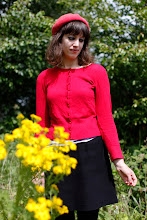
The Shrieking Violet is teaming up with Steve Hanson for a guest DJ set (vinyl only!) at indie-pop night Recordsville Social.
Recordsville is taking place at Seven Miles Out (opposite Stockport market) on Friday 11 August from 8pm-12am. Free entry!
For more information see the Facebook event.
Showing posts with label Punk. Show all posts
Friday, 4 August 2017
Monday, 21 December 2015
The Shrieking Violets on Bandcamp
I recently digitised the first album I ever made, on cassette tape, when I was 16, during the summer holidays after my GCSEs. It was recorded in my parents' attic, in a very rudimentary fashion, on a Sony shoebox recorder. It can now be listened to at https://theshriekingviolets.bandcamp.com/album/first-album. I'm not sure why I felt the need to put it online, except that I guess it's the first thing I ever made, by myself, just got on with, produced, because I had to, needed to. For that reason it's still my most treasured possession.

By way of introduction, here is a piece I wrote about my teenage music-making for Black Dogs' publication Hope From Dead End Town a few years ago.

'A View from (under) the Bridge': a short story about growing up weird
I grew up in a small town called Hythe on the south coast of England, a picturesque and pleasant, yet quiet, town nestled between the English Channel and rolling Kent countryside which is populated predominantly by two groups of people: pensioners and Conservative voters. Hythe is in the south eastern corner of England, not really on the way to anywhere, and it's a place where time passes slowly; when I was a teenager, the social life of one group of old men consisted of sitting in a row on one of the town's bridges for a chat at the same time every day, resting halfway between home and the shops, their walking sticks propped up on the pavement. As a child who was never conventionally pretty, girly or interested in subjects deemed fitting topics for discussion by teenage girls, I didn't really fit in there, or at my all girls' school a twenty minute bus-ride away, and as much as I tried to make friends my overall experience was of overwhelming loneliness, from which I tried doggedly to distract myself by making music and art.
In my early teens I became obsessed with playing the guitar, both as an outlet for my creative frustration and as something to do to pass the time. I asked for an acoustic guitar for my fourteenth birthday, and when my mum and dad took me to a guitar shop in the nearest city, Canterbury, I knew that the black Fender I picked up, so shiny I could see my face in its surface, was the guitar for me; it was love at first sight. Later, I talked them into buying me a hard, black guitar case lined with what looked liked luxurious red velvet, a fitting home for my precious instrument, and was given a hippyish, rainbow-woven guitar strap which contrasted nicely with its stylish, unbroken blackness.
I took to lugging the guitar everywhere with me as if it was my best friend, the awkward, slippery handle of the heavy case wearing red marks into my hands as I wandered around the town from spot to spot, an unlikely, roving busker singing songs no-one else knew the words to. I tried to play songs like Shake Some Action by Californian band Flamin Groovies (with lyrics like "If you don't dig what I say/Then I will go away/And I won't come back this again. No/'Cause I don't need a friend”, Shake Some Action was the rousing, defiant anthem of my teenage disaffection, and it's a song I still play from time to time today), and underage romance 13 by Big Star, little realising that potential listeners wanted something familiar they could hum along to like the Beatles or Oasis. I clung onto the hope, however, that if only someone who shared my love of sixties and seventies American power pop would walk past one day and stop and talk to me, I'd finally meet someone with whom I had something in common, and find a companion.
I used to sit and play on a smooth worn step in front of the town hall, my legs dangling down onto the paving slabs of the High Street, struggling to make my voice heard over the uninterested shoppers, or on the uncomfortable, stony beach and the distinctive, pink-painted promenade which ran alongside it, and sometimes on the gently sloping banks of the historic, tranquil Royal Military Canal which meanders placidly through the town, built centuries ago to defend the Kent coast from the threat of invasion by Napoleon, amid daffodils and swans and under the shade of weeping willow trees.
One day I decided to take this to its logical conclusion and go and sit and play under one of the bridges which takes cars and pedestrians over the canal, to find out how it echoed, and make some recordings on my portable 'shoebox-style' recorder. I was inspired partly by my favourite guitarist at the time, John Fahey, who wrote a piece of music based on a 'singing bridge' in Memphis, Tennessee (as a teenager, I spent a disproportionate amount of time daydreaming about visiting the Southern States of the United States, inspired both by its completely alien landscape and the potential for adventures suggested to me by its literature and music), and in part by the episode of the Simpsons in which Lisa Simpson, another hero of mine, joins saxophonist Bleeding Gums Murphy in a jam on a moonlit bridge, an homage to the famous story of jazz musician Sonny Rollins practising on the Williamsburg Bridge in New York over on the equally remote, exciting and exotic East coast of America. Despite my parents' concern – they teasingly called me 'troll', and warned me of vermin and the dangers of waterborne Weil's disease – I became obsessed with going and sitting, alternating depending on whichever took my fancy that day, under two facing bridges at opposite ends of the town centre. I found the bridges to be perfect practice rooms to experiment with different sounds and try out the metal and glass slides and capo I'd bought from the nearby music shop in the High Street, which was run by one eccentric, opinionated man who would talk your ear off if given half a chance. Eventually, I put voice to my own songs and lyrics.
For me, the bridges were both private and a magical places, giving me space to sit, think and watch the world go by. In sunshine, I watched elusive ripples of light dance above me, reflected on the bridges' low roofs, trying again and again to capture the fleeting dashes of sunlight and recreate the essence of the place as short films on my digital camera. In stormy weather, rain and hail fell onto the surface of the water in small circles and the bridges became my refuge from thunder and lightning, an experience I found more exciting than frightening. I was usually undisturbed, save from occasional hired rowing boats going past bearing noisy families and the occasional sunburnt couple, some of whom appeared to be pleased by my music, which must have broken up the physical monotony of their oar strokes, and some of whom didn't seem sure how to react.
For a couple of years, it felt like I spent all my weekends and summer holidays under bridges – so much so that I even had my sixteenth birthday party down there and convinced some of my classmates to get the bus into Hythe to join me, eating cake and sheltering from the half-hearted rain of a mid-May day.
Labels:
Bedroom Discos,
Big Star,
Cassette Tapes,
DIY,
Folk,
Folkestone,
guitar,
Hythe,
Kent,
Music,
Pop,
publishing,
Punk,
Self-publishing,
Singing,
Teenagers,
The Shrieking Violet
Saturday, 1 February 2014
The Shrieking Violet issue 22
Read the Shrieking Violet issue 22 online now:
This issue's cover is by Alex Humphreys. Alex uses two-dimensional imagery with a high emphasis on the use of colour and composition. With the enjoyment of combining bold shapes and techniques of mark-making, Alex aims to make work with an experimental, abstract outcome. Alex's work is hand-screen printed and lies heavily in the form of traditional print. Alex also plays in Sex Hands, one of the Shrieking Violet's favourite Manchester bands; see them at Night & Day on Thursday February 6, and at Gullivers, on Wednesday February 26, in support of another of the Shrieking Violet's favourite bands, Trash Kit.
In issue 22:
Manchester-based craftivist duo Warp & Weft introduce their Stature exhibition in Manchester Town Hall (February 24-March 9), which examines how women’s lives and achievements have been recorded in history. Warp & Weft are Helen Davies and Jenny White. Helen is an artist specialising in needlecrafts; she is interested in the social history of craft and women. She also makes monsters at helenmakes.co.uk. Historian Jenny White is interested in the way different sections of society are represented in the media and history, and is drawn to those whose stories aren’t usually told. She also takes photos for Trash Gallery.
Tom Whyman takes a look at the legacy of football pundit Alan Hansen, and the growing impossibility of having an opinion and engaging critically with the world. Tom is a writer and philosopher currently studying for his PhD at the University of Essex. Before that he lived and studied in Manchester. He blogs at infinitelyfullofhope.wordpress.com and tweets as @HealthUntoDeath.
Cazz Blase explores the alternative realities of Manchester and London in the work of Jeff Noon, Ben Moor and Neil Gaiman, where the real meets the unreal. Cazz is trying to establish herself as a freelance journalist while working as a library assistant at Manchester University. She normally focuses on music and/or feminism, but has a long term love of radio comedy and sci-fi and thought it was time to share it with a wider audience than bemused friends in cafes.
Joe Austin pays a visit to one of London's overlooked Modernist landmarks, and a hidden sculptural masterpiece, at the TUC's post-war headquarters, Congress House. Joe is a qualified architect, originally from the Midlands but a naturalised Londoner for the last 24 years or so. Joe's interests are wide (his blog best illustrates his scattergun mind), but generally revolve around writing, design, architecture, art, culture and history. He likes nothing better than learning new aspects of things he thought he knew about.
Artist and musician Henry Ireland reflects impressionistically on his experiences over the past year, accompanied by photographs from his summer-2013 tour of the UK with Two White Cranes and the Nervy Betters. Henry helps run Polite Records and lives in London with his wife Frances.
David Wilkinson discusses The Fall, The Blue Orchids and the working class autodidact, drawing on interviews with Martin Bramah and Una Baines undertaken during his PhD. David lives in Manchester, where he completed his PhD on post-punk last year. He is currently research assistant on the project ‘Punk, Politics and British Youth Culture 1976-1984’, led by Matthew Worley and John Street. He has also written for the F Word, Manchester Histories Festival and Manchester District Music Archive. At the moment David is thinking about punk and sexuality and will be doing a talk on this for LGBT History Month at MMU (Geoffrey Manton Building Lecture Theatre 6), Wednesday February 12 at 6pm. The Blue Orchids, meanwhile, are playing at the Star and Garter on Saturday February 15 at the Light it Up clubnight.
West Yorkshire-based photographer and eternal wanderer Jonathan Salmon presents some atmospheric images contemplating a new life in the country, capturing both the freedom and suffocation caused by vast open spaces. Jonathan lives down the hill from the old Yorkshire town of Queensbury, one of the highest towns in the UK, and often wakes up to an eerie fog. Jonathan is currently artist of the month, and his photographs are on display, at Trof in Levenshulme (Trof have contributed this issue's recipe, see below).
Writer and journalist Kenn Taylor contributes a poem about austerity. Originally from Merseyside but now living in London, Kenn has a particular interest in the relationship between community, culture and the urban environment.
Manchester-based filmmaker and musician Richard Howe continues his series on mental health in the movies by looking at Temple Grandin by Mick Jackson, which stars Claire Danes as a young autistic girl. Tweet Richard about films @rikurichard. Watch his latest short film, Beware, at www.youtube.com/watch?v=gDve4PXLlrw.
Jared Szpakowski introduces ALBUMCLUB, a monthly theme-based music exchange. Jared is an NHS administrator and an artist based at 3rd Floor Studios in Manchester. His work documents everything from the life and death of houseplants to the decomposition of airline chapatis, NHS paraphernalia and the contents of his wife's granddad's Bible who he never met and is no longer with us. He keeps an almost-daily blog at www.threeteabagsinanenvelope.tumblr.com and has just launched a monthly soundtrack to accompany the visuals. He is also the chairman and founder of ALBUMCLUB.
Book and print-maker Jo Wilkinson has contributed an illustrative drawing. Jo constantly battles with time, finding that there are never enough hours to draw, collage, collect ephemera, fold, cut or sew. Her small, pamphlet-style books are usually non-narrative pieces, with her drawings comprising illustrative, one-off stories on a page, although she has created one love story.
Husband and wife team Trove, who believe in making good food from scratch, tell the story of how their cafe and bakery came into being and contribute a recipe for beetroot hummus. Trove's organic, homemade, artisan bread, from sourdough to rye, is used both in the cafe and can be found in Unicorn Grocery in Chorlton, Back's Deli in Heaton Moor, Polocini cafe, Romiley, Fig and Sparrow lifestyle shop and cafe, Manchester, Cowherds Vegetarian Cafe, Trafford, Volta bar and restaurant, West Didsbury and Eleckrik cafe/bar, Chorlton. Trove has won two Manchester Food and Drink Festival awards, one for being 'Truly Good Food Heroes' and the other for being the best 'Cheap Eats' venue in Manchester. Find them in Levenshulme, opposite the Antiques Village.
Download and print your own copy here. Read issue 22, along with back issues of the Shrieking Violet, in Salford Zine Library at Nexus Art Cafe in Manchester's Northern Quarter. Paper copies can also be found in the Working Class Movement Library in Salford.
This issue's cover is by Alex Humphreys. Alex uses two-dimensional imagery with a high emphasis on the use of colour and composition. With the enjoyment of combining bold shapes and techniques of mark-making, Alex aims to make work with an experimental, abstract outcome. Alex's work is hand-screen printed and lies heavily in the form of traditional print. Alex also plays in Sex Hands, one of the Shrieking Violet's favourite Manchester bands; see them at Night & Day on Thursday February 6, and at Gullivers, on Wednesday February 26, in support of another of the Shrieking Violet's favourite bands, Trash Kit.
In issue 22:
Manchester-based craftivist duo Warp & Weft introduce their Stature exhibition in Manchester Town Hall (February 24-March 9), which examines how women’s lives and achievements have been recorded in history. Warp & Weft are Helen Davies and Jenny White. Helen is an artist specialising in needlecrafts; she is interested in the social history of craft and women. She also makes monsters at helenmakes.co.uk. Historian Jenny White is interested in the way different sections of society are represented in the media and history, and is drawn to those whose stories aren’t usually told. She also takes photos for Trash Gallery.
Tom Whyman takes a look at the legacy of football pundit Alan Hansen, and the growing impossibility of having an opinion and engaging critically with the world. Tom is a writer and philosopher currently studying for his PhD at the University of Essex. Before that he lived and studied in Manchester. He blogs at infinitelyfullofhope.wordpress.com and tweets as @HealthUntoDeath.
Cazz Blase explores the alternative realities of Manchester and London in the work of Jeff Noon, Ben Moor and Neil Gaiman, where the real meets the unreal. Cazz is trying to establish herself as a freelance journalist while working as a library assistant at Manchester University. She normally focuses on music and/or feminism, but has a long term love of radio comedy and sci-fi and thought it was time to share it with a wider audience than bemused friends in cafes.
Joe Austin pays a visit to one of London's overlooked Modernist landmarks, and a hidden sculptural masterpiece, at the TUC's post-war headquarters, Congress House. Joe is a qualified architect, originally from the Midlands but a naturalised Londoner for the last 24 years or so. Joe's interests are wide (his blog best illustrates his scattergun mind), but generally revolve around writing, design, architecture, art, culture and history. He likes nothing better than learning new aspects of things he thought he knew about.
Artist and musician Henry Ireland reflects impressionistically on his experiences over the past year, accompanied by photographs from his summer-2013 tour of the UK with Two White Cranes and the Nervy Betters. Henry helps run Polite Records and lives in London with his wife Frances.
David Wilkinson discusses The Fall, The Blue Orchids and the working class autodidact, drawing on interviews with Martin Bramah and Una Baines undertaken during his PhD. David lives in Manchester, where he completed his PhD on post-punk last year. He is currently research assistant on the project ‘Punk, Politics and British Youth Culture 1976-1984’, led by Matthew Worley and John Street. He has also written for the F Word, Manchester Histories Festival and Manchester District Music Archive. At the moment David is thinking about punk and sexuality and will be doing a talk on this for LGBT History Month at MMU (Geoffrey Manton Building Lecture Theatre 6), Wednesday February 12 at 6pm. The Blue Orchids, meanwhile, are playing at the Star and Garter on Saturday February 15 at the Light it Up clubnight.
West Yorkshire-based photographer and eternal wanderer Jonathan Salmon presents some atmospheric images contemplating a new life in the country, capturing both the freedom and suffocation caused by vast open spaces. Jonathan lives down the hill from the old Yorkshire town of Queensbury, one of the highest towns in the UK, and often wakes up to an eerie fog. Jonathan is currently artist of the month, and his photographs are on display, at Trof in Levenshulme (Trof have contributed this issue's recipe, see below).
Writer and journalist Kenn Taylor contributes a poem about austerity. Originally from Merseyside but now living in London, Kenn has a particular interest in the relationship between community, culture and the urban environment.
Manchester-based filmmaker and musician Richard Howe continues his series on mental health in the movies by looking at Temple Grandin by Mick Jackson, which stars Claire Danes as a young autistic girl. Tweet Richard about films @rikurichard. Watch his latest short film, Beware, at www.youtube.com/watch?v=gDve4PXLlrw.
Jared Szpakowski introduces ALBUMCLUB, a monthly theme-based music exchange. Jared is an NHS administrator and an artist based at 3rd Floor Studios in Manchester. His work documents everything from the life and death of houseplants to the decomposition of airline chapatis, NHS paraphernalia and the contents of his wife's granddad's Bible who he never met and is no longer with us. He keeps an almost-daily blog at www.threeteabagsinanenvelope.tumblr.com and has just launched a monthly soundtrack to accompany the visuals. He is also the chairman and founder of ALBUMCLUB.
Book and print-maker Jo Wilkinson has contributed an illustrative drawing. Jo constantly battles with time, finding that there are never enough hours to draw, collage, collect ephemera, fold, cut or sew. Her small, pamphlet-style books are usually non-narrative pieces, with her drawings comprising illustrative, one-off stories on a page, although she has created one love story.
Husband and wife team Trove, who believe in making good food from scratch, tell the story of how their cafe and bakery came into being and contribute a recipe for beetroot hummus. Trove's organic, homemade, artisan bread, from sourdough to rye, is used both in the cafe and can be found in Unicorn Grocery in Chorlton, Back's Deli in Heaton Moor, Polocini cafe, Romiley, Fig and Sparrow lifestyle shop and cafe, Manchester, Cowherds Vegetarian Cafe, Trafford, Volta bar and restaurant, West Didsbury and Eleckrik cafe/bar, Chorlton. Trove has won two Manchester Food and Drink Festival awards, one for being 'Truly Good Food Heroes' and the other for being the best 'Cheap Eats' venue in Manchester. Find them in Levenshulme, opposite the Antiques Village.
Download and print your own copy here. Read issue 22, along with back issues of the Shrieking Violet, in Salford Zine Library at Nexus Art Cafe in Manchester's Northern Quarter. Paper copies can also be found in the Working Class Movement Library in Salford.
Labels:
Art,
Fanzines,
Feminism,
Fiction,
Film,
Food,
Illustration,
London,
Manchester,
Modernism,
Music,
Photography,
Poetry,
Public art,
Punk,
Salford,
Sculpture,
The Shrieking Violet,
West Yorkshire,
Zines
Tuesday, 31 December 2013
Best of 2013
As I write this I'm coming to the end of the first year of my PhD (technically I'm still at the MPhil stage), which is exciting but also quite terrifying as I don't know where the last twelve months have gone and I feel like I should have more to show for the year. It's been a big challenge going from three years of working almost full-time to being a full-time student without the structure and company of an office job, but it's also been stimulating, exciting and eye-opening. What I wanted to get out of doing a PhD was a challenge, and to be challenged, and I definitely feel a lot less certain of myself and my place in the world now, with certain assumptions of what I was good at (writing, organisation, time management) turned upside down. It's become increasingly apparent how many things I need to improve at.
Nonetheless, having more energy (in theory) because of being able to spend less time in an office, I've been able to get a lot more involved in Islington Mill Art Academy throughout the year, taking part in regular crits, reading groups and outings, which has provided both a really good support network and a receptive audience to talk about and present what I've been working on. When I found out I was going to be a student again, I was also looking forward to being able to join a university orchestra, but my university doesn't appear to have one. Luckily, a short google search revealed that Oldham Symphony Orchestra has the same conductor as the orchestra I was in as an undergraduate. Joining has been another big challenge as I've not played violin regularly for at least five years. It's been a great way of continuing my musical education, though, as not coming from a background immersed in classical music I've always found it difficult to get into a lot of the classical music cannon without actively playing it.
I also spent more time in London in 2013 than I have ever done before, much of it alone. Taking to the streets on foot, with an A to Z, has really helped me overcome my phobia of the city. After many years of finding London grey, grimy, overcrowded and depressing, 2013 is the year I finally found some things to like about it. Mainly, the food-related delights of Drummond Street, Euston Tap (cider branch) and, above all Hampstead Ponds. At Hampstead Ponds the water is warm and calm and there is plenty of space to swim, but best of all student entry is only a pound! I can eat curry and drink cider in Manchester any time, but as far as I know Manchester doesn't have any ponds I can swim in and the liberating experience of swimming in Hampstead Ponds is by far the most enjoyable thing I have ever done in London.
Also in swimming-related news, I finally braved Salford Quays for an open water swimming session in Ontario Basin, once the water temperature had crept above the 14 degrees required to swim without a wetsuit, and it was one of the best experiences I have ever had in Greater Manchester. At 21.7 degrees the water was warmer than the sea, and surprisingly fresh and clean. The 500m course is quite a long way to swim, but feels a lot less monotonous than laps of a pool; it's strange to swim underneath huge cranes, with trams constantly going past. I found the distance of the course to present a mental challenge as much as a physical challenge: being surrounded by a vast stretch of deep, black water, not knowing what's beneath, is quite a lonely experience and a test of endurance, although the atmosphere of the facilities was very friendly and the regulars were a diverse bunch of people.
Some other things I have enjoyed in 2013:
Music
A good chunk of the last few months has been soundtracked by my standout album of the last couple of years, Light Up Gold by Parquet Courts. A classic punk rock band who channel the spirit of the Saints, etc, and bring to mind Pavement in their slower moments, listening to their record reminds me what a great motivator rock music can be: sometimes it's the only thing that makes you feel like you're fully alive, have blood in your veins and actually want to get up and do something. Highlight: Stoned and Starving.
I've also been enjoying Thee Oh Sees' solid album of spaced out rock, Floating Coffin, particularly Night Crawler. Low's latest album, the Invisible Way, was also a surprise delight. After losing interest in Low around the time of their last album, Just Make It Stop reminded me why I spent so many years bewitched by Mimi's voice and their distinctively sparse sound.
This year I've also heard the best band to emerge from Manchester in a while, Denson, who make really beautiful, dreamlike electronic rock with a slightly surrealistic edge. Unlike most Manchester bands I've enjoyed in the last few years, it's not grounded in the here-and-now (and doesn't hark back to the 1960s) but appears to be transmitted down from another planet altogether and belong to an entirely less-familiar world. For fans of Sleeping States, Cryptacize and Broadcast, my favourite track is Milkismurder.
For the same reasons as above, the best gig of the year was Parquet Courts at Gorilla. They're definitely a band to jump up and down to, and I took part in a mosh pit for the first time in several years, leaving the gig soaked through in sweat.
An early highlight of the year was Dinosaur Jr at the Ritz. I love Dinosaur Jr for the way they make music that is undisputedly noisy, but at the same time incredibly beautiful. J Mascis's unparalleled control of his guitar and the way he makes quite complicated music appear effortless is a sight to behold. It's just a shame that the gig took place at the corporate behemoth of the Ritz, which immediately put my back up by confiscating my bottle of water at the door. As a lone female, I also felt outnumbered by a ratio of around 25:1 by pairs/groups of men of a certain age.
Also enjoyable was ice queen-like, impossible impeccable-looking Molly Nilsson's mournful dance music at Islington Mill in Salford and Franziska Lantz (Saydance)'s weird, atmospheric electronica performance at the Anthony Burgess Foundation to launch the Cacotopia exhibition.
The most entertaining band I saw this year was undoubtedly Joyce D'Vision, a three-piece fronted by a man in a dress which plays joyous and surprisingly musically accomplished covers of Joy Division. I saw them in From Space, a small ceramics studio on Chapel Street, Salford, supporting fun American anti-folk band Cars Can Be Blue, surrounded by artist Liz Scrine's creations, and it was one of the best moments of the summer. Bristol bands the Nervy Betters and Two White Cranes played out the end of a long hot summer in a marquee in a Chorlton garden beneath a tree groaning with apples.
After many years of finding him annoyingly blokey and musically undistinguished, 2013 was also the year I sort of got into Billy Bragg, a bit, after buying my mum tickets to see him at the Bridgewater Hall as a birthday present. The rest of it I can take or leave, but I've now come round to the idea that Milkman of Human Kindness is one of the most perfect songs I've ever heard, beautiful in its simplicity and utterly affecting in its lyrics. I admit that the rest of Life's a Riot with I Vs Spy is pretty great too. Another late highlight of the year was Yo La Tengo at the De La Warr Pavilion in Bexhill on Sea who, incredibly had just marked their thirtieth year of playing together as a band.
Film
I thought 2013 was a very strong year for film. The year started with McCullin, a documentary about the great British photographer focusing largely on his work in war zones. The film is harrowing and incredibly moving, making you question everything around you and really putting things into perspective. The first ever Saudi Arabian film I've seen, Wadja, was also moving and inspiring. Equally uplifting and heartbreaking, it's a real eye-opener. Blue is the Warmest Colour definitely didn't feel like a three-hour film. While it wasn't always comfortable watching I found it to be a bold and honest depiction of love, obsession, adolescence and growing up. It was also good to see a depiction of female sexual desire which didn't present women as passive accessories to male sexuality but as sexual beings in their own right.
On a lighter note, the film I was looking forward to most this year, Pedro Almodovar's I'm So Excited, was everything I could have hoped for: colourful, silly, musical and hilarious from start to finish. 2013 was also the year I saw my first Studio Ghibli film, after many years of assuming they would be cloyingly twee, and I loved everything about Up On Poppy Hill from the style to the animation to the story to the music, which stayed just the right side of retro.
Woody Allen's latest, Blue Jasmine, was surprisingly sophisticated, and I found myself mulling over for a few days afterwards, along with tense American drama Breathe In which provided an unflinching portrait of ordinary human beings deeply flawed in their self-obsession.
I also enjoyed some of this year's documentaries, including John Akomfrah's multi-sided the Stuart Hall Project, which presented his ideas and writing through archive footage and Hall speaking in his own words. I also enjoyed Ken Loach's Spirit of 45. Although it wasn't subtle, I found many of the interviewees inspiring in their attitude and spirit.
I also thought that the annual Viva! Festival of Spanish and Latin American film at the Cornerhouse, which I often find really patchy, was the strongest one I have attended over the last five or six years (unless I have just become better at choosing films!). I enjoyed a moving if depressing documentary of the Chilean folk singer Violeta Parra, Violeta Went to Heaven, with a fantastic soundtrack, along with Spanish film Ali, a simple and touching tale of love, relationships and growing up. However, the stand-out highlight, which was also one of the best films I saw this year, was Catalan teen drama the Wild One, which built a sense of unease and suspense with great effect, before revealing a conclusion that was genuinely shocking, a rare quality nowadays.
Books
I've hardly read any non-academic books in 2013, but William Mitchell's autobiography Self-Portrait: The Eyes Within, which arrived a couple of days before Christmas, was the best present I could have hoped for. As well as spending several decades at the forefront of artistic innovation and experimentation, Mitchell has revealed himself to be a great story-teller with plenty to say about not just art, but society.
Television and radio
After several years of only watching factual television, I finally found the BBC drama for me, Him & Her. I don't know if it speaks to me because I would quite like to stay in bed all day if I had the chance, or because the characters are so naturalistic and take delight in the mundane (and often gross) aspects of life and relationships, but it's an impeccably acted and cast show.
Grayson Perry's In the Best Possible Taste was an interesting experiment, although I found it a bit simplistic and impossible to relate to any of the class/taste 'tribes' he identified (the resulting tapestries, the Vanity of Small Differences, currently on display at Manchester Art Gallery, are immense, storytelling works of great beauty and detail which are well worth investing time in and bear up to repeat visits). I found Paul O'Grady's take on a similar subject, Paul O'Grady's Working Britain, more nuanced and enlightening. However, Grayson Perry definitely won in the radio stakes, with his series of Reith Lectures which were laugh-out -loud funny, insightful and provocative.
While I find that much of his writing and broadcasting often borders on incomprehensible, I also enjoyed Jonathan Meades' offbeat tour of my parents' homeland, the Joy of Essex, which made me endeavour to explore more of my own country.
Theatre
Arthur Miller's All My Sons was one of the best productions I have ever seen at the Royal Exchange. It could have backfired, but I thought the all-black cast worked really well and added a whole new dimension to the play.
Art
The stand-out highlight of the year was Tino Sehgal's installation This Variation at Mayfield Depot during Manchester International Festival. I thought I knew Sehgal's work reasonably well, but was genuinely surprised by the immersive, unexpected and surprisingly intimate performance he pulled off. It didn't hurt that Good Vibrations by the Beach Boys, an a capella performance of which featured in the installation, is in my view the peak of twentieth century pop music.
Dan Graham's Past Future Split Attention was also a highlight, as was Graham's post-performance talk in which he offered entertaining insights from his polymath mind on everything from the Shaker movement to psychology and rock music. The other highlight of the International Festival was the Biospheric Project, a mind-bogglingly innovative initiative using an old industrial building and outdoor site to explore sustainable ways of growing fresh, local produce in urban settings.
An unexpected London highlight was Souzou, the Wellcome Institute's exhibition of Japanese outsider art, comprising drawings, paintings, textiles, sculptures and models, much of it made by residents of mental institutions. Much of it was bizarre, imaginative, tactile and intricate, but above all it was bright, colourful and beautiful.
Also in London, Schwitters in Britain at Tate Britain provided an interesting overview of the artist and his life and work: several of the works I found most affecting were those made out of unlikely materials in prison camps (also with camp magazines), representing what can be made with all that is to hand.
An early highlight of the year was Carl Andre: Mass and Matter at Turner Contemporary in Margate, which showed how powerful simple materials and forms can be, regardless of concept.
One of the most effective projects I saw was Maurice Carlin's Performance Publishing at Regent Trading Estate in Salford, a printing project and art installation on a grand scale that reconfigured the artist and viewer's relationship with an otherwise bland and vast former warehouse building, and transformed the previously empty space into a carpet of colour.
The Piracy Project at Grand Union in Birmingham was a show that was greater than the sum of its parts: a growing collection of artists' books exploring notions around copyright, appropriation, ownership, authorship and meaning.
Manchester's Bureau Gallery made some interesting use of their new space in a Spinningfields office building, notably Matthew Houlding's miniature, colourful, architectural-style models, which played off the transparency of the space, and the repetitive motifs of Evangelia Spiliopoulou's dot paintings, which revealed more the more you looked at them. It was also a good year for Castlefield Gallery, particularly Nicola Ellis's delicate drawings, Sam Meech's film Noah's Ark, where music complemented archive film of seaside towns to great effect, in Spaceship Unbound, and Joseph Lewis' old-fashioned-looking and furniture-fitting-esque instruments in the current show, Radical Conservatism. Another highlight from one of Manchester's smaller galleries was Anthony Hall's fun and inventive Tabletop Experiments at Untitled Gallery, which brought together science and art to great effect.
I loved the Museum of Everything theme at Venice Biennale, which blended art with anthropology, and felt that it was a far less ostentatious and more subtle and effective event this year than in previous years. Highlights included the Starry Messenger, Bedwyr Williams' immersive film and installation which took visitors on a strange, Jan Svankmajer-esque journey through the off-site Welsh pavilion, as well as the films and wallpapered surroundings of the Slovenian pavilion, based around the unfortunately-named 'failed national icon' of the Anophthalmus hitleri beetle, exploring place, politics, architecture and monuments, as well as Ed Atkins' deadpan exploration of Andre Breton's home, the Trick Brain.
Architecture
The most impressive new building of the year was the Co-operative's long-awaited new headquarters at 1 Angel Square. I was lucky enough to go on an architect's tour shortly after it opened, and to hear about all the sustainability measures which have been built in to make it one of the most environmentally-friendly buildings in Europe; these encompass not just environmental and technical elements such as the air circulation system for heating and cooling the building, but working practices such as paperless offices and hot desking. The open plan nature of the building means it can easily be adapted for future uses and clients, and the forward-thinking vision behind the building, and consideration of its legacy, particularly impressed me. It was interesting to hear how the architect drew on the Co-operative's architectural and symbolic heritage in the area, from the steel and glass of the 1960s CIS tower to the curved structure of the beehive with its associations with both the co-operative movement and the city of Manchester. Seeing the building from the outside really doesn't prepare you for the scale of the building; apparently the atrium is big enough to park a Boing 747 (should the need ever arise). The building has fantastic views over Manchester and really utilises its position with roof terraces, however the thing which lets the building down is its over-the-top, self-consciously quirky décor, which is probably meant to feel fun and informal but comes across as piecemeal and jarring and I imagine will date very quickly, from the abundance of tea cup-shaped, pop art-style seats to informal meeting areas themed around palm trees. Another design flaw, in my view, is the apparent lack of microwaves in any of the shared kitchen areas: being able to look forward to a big bowl of steaming leftovers at lunchtime is one of the things that gets me through the working day.
Nonetheless, having more energy (in theory) because of being able to spend less time in an office, I've been able to get a lot more involved in Islington Mill Art Academy throughout the year, taking part in regular crits, reading groups and outings, which has provided both a really good support network and a receptive audience to talk about and present what I've been working on. When I found out I was going to be a student again, I was also looking forward to being able to join a university orchestra, but my university doesn't appear to have one. Luckily, a short google search revealed that Oldham Symphony Orchestra has the same conductor as the orchestra I was in as an undergraduate. Joining has been another big challenge as I've not played violin regularly for at least five years. It's been a great way of continuing my musical education, though, as not coming from a background immersed in classical music I've always found it difficult to get into a lot of the classical music cannon without actively playing it.
I also spent more time in London in 2013 than I have ever done before, much of it alone. Taking to the streets on foot, with an A to Z, has really helped me overcome my phobia of the city. After many years of finding London grey, grimy, overcrowded and depressing, 2013 is the year I finally found some things to like about it. Mainly, the food-related delights of Drummond Street, Euston Tap (cider branch) and, above all Hampstead Ponds. At Hampstead Ponds the water is warm and calm and there is plenty of space to swim, but best of all student entry is only a pound! I can eat curry and drink cider in Manchester any time, but as far as I know Manchester doesn't have any ponds I can swim in and the liberating experience of swimming in Hampstead Ponds is by far the most enjoyable thing I have ever done in London.Also in swimming-related news, I finally braved Salford Quays for an open water swimming session in Ontario Basin, once the water temperature had crept above the 14 degrees required to swim without a wetsuit, and it was one of the best experiences I have ever had in Greater Manchester. At 21.7 degrees the water was warmer than the sea, and surprisingly fresh and clean. The 500m course is quite a long way to swim, but feels a lot less monotonous than laps of a pool; it's strange to swim underneath huge cranes, with trams constantly going past. I found the distance of the course to present a mental challenge as much as a physical challenge: being surrounded by a vast stretch of deep, black water, not knowing what's beneath, is quite a lonely experience and a test of endurance, although the atmosphere of the facilities was very friendly and the regulars were a diverse bunch of people.
Some other things I have enjoyed in 2013:
Music
A good chunk of the last few months has been soundtracked by my standout album of the last couple of years, Light Up Gold by Parquet Courts. A classic punk rock band who channel the spirit of the Saints, etc, and bring to mind Pavement in their slower moments, listening to their record reminds me what a great motivator rock music can be: sometimes it's the only thing that makes you feel like you're fully alive, have blood in your veins and actually want to get up and do something. Highlight: Stoned and Starving.
I've also been enjoying Thee Oh Sees' solid album of spaced out rock, Floating Coffin, particularly Night Crawler. Low's latest album, the Invisible Way, was also a surprise delight. After losing interest in Low around the time of their last album, Just Make It Stop reminded me why I spent so many years bewitched by Mimi's voice and their distinctively sparse sound.
This year I've also heard the best band to emerge from Manchester in a while, Denson, who make really beautiful, dreamlike electronic rock with a slightly surrealistic edge. Unlike most Manchester bands I've enjoyed in the last few years, it's not grounded in the here-and-now (and doesn't hark back to the 1960s) but appears to be transmitted down from another planet altogether and belong to an entirely less-familiar world. For fans of Sleeping States, Cryptacize and Broadcast, my favourite track is Milkismurder.
For the same reasons as above, the best gig of the year was Parquet Courts at Gorilla. They're definitely a band to jump up and down to, and I took part in a mosh pit for the first time in several years, leaving the gig soaked through in sweat.
An early highlight of the year was Dinosaur Jr at the Ritz. I love Dinosaur Jr for the way they make music that is undisputedly noisy, but at the same time incredibly beautiful. J Mascis's unparalleled control of his guitar and the way he makes quite complicated music appear effortless is a sight to behold. It's just a shame that the gig took place at the corporate behemoth of the Ritz, which immediately put my back up by confiscating my bottle of water at the door. As a lone female, I also felt outnumbered by a ratio of around 25:1 by pairs/groups of men of a certain age.
Also enjoyable was ice queen-like, impossible impeccable-looking Molly Nilsson's mournful dance music at Islington Mill in Salford and Franziska Lantz (Saydance)'s weird, atmospheric electronica performance at the Anthony Burgess Foundation to launch the Cacotopia exhibition.
The most entertaining band I saw this year was undoubtedly Joyce D'Vision, a three-piece fronted by a man in a dress which plays joyous and surprisingly musically accomplished covers of Joy Division. I saw them in From Space, a small ceramics studio on Chapel Street, Salford, supporting fun American anti-folk band Cars Can Be Blue, surrounded by artist Liz Scrine's creations, and it was one of the best moments of the summer. Bristol bands the Nervy Betters and Two White Cranes played out the end of a long hot summer in a marquee in a Chorlton garden beneath a tree groaning with apples.
After many years of finding him annoyingly blokey and musically undistinguished, 2013 was also the year I sort of got into Billy Bragg, a bit, after buying my mum tickets to see him at the Bridgewater Hall as a birthday present. The rest of it I can take or leave, but I've now come round to the idea that Milkman of Human Kindness is one of the most perfect songs I've ever heard, beautiful in its simplicity and utterly affecting in its lyrics. I admit that the rest of Life's a Riot with I Vs Spy is pretty great too. Another late highlight of the year was Yo La Tengo at the De La Warr Pavilion in Bexhill on Sea who, incredibly had just marked their thirtieth year of playing together as a band.
Film
I thought 2013 was a very strong year for film. The year started with McCullin, a documentary about the great British photographer focusing largely on his work in war zones. The film is harrowing and incredibly moving, making you question everything around you and really putting things into perspective. The first ever Saudi Arabian film I've seen, Wadja, was also moving and inspiring. Equally uplifting and heartbreaking, it's a real eye-opener. Blue is the Warmest Colour definitely didn't feel like a three-hour film. While it wasn't always comfortable watching I found it to be a bold and honest depiction of love, obsession, adolescence and growing up. It was also good to see a depiction of female sexual desire which didn't present women as passive accessories to male sexuality but as sexual beings in their own right.
On a lighter note, the film I was looking forward to most this year, Pedro Almodovar's I'm So Excited, was everything I could have hoped for: colourful, silly, musical and hilarious from start to finish. 2013 was also the year I saw my first Studio Ghibli film, after many years of assuming they would be cloyingly twee, and I loved everything about Up On Poppy Hill from the style to the animation to the story to the music, which stayed just the right side of retro.
Woody Allen's latest, Blue Jasmine, was surprisingly sophisticated, and I found myself mulling over for a few days afterwards, along with tense American drama Breathe In which provided an unflinching portrait of ordinary human beings deeply flawed in their self-obsession.
I also enjoyed some of this year's documentaries, including John Akomfrah's multi-sided the Stuart Hall Project, which presented his ideas and writing through archive footage and Hall speaking in his own words. I also enjoyed Ken Loach's Spirit of 45. Although it wasn't subtle, I found many of the interviewees inspiring in their attitude and spirit.
I also thought that the annual Viva! Festival of Spanish and Latin American film at the Cornerhouse, which I often find really patchy, was the strongest one I have attended over the last five or six years (unless I have just become better at choosing films!). I enjoyed a moving if depressing documentary of the Chilean folk singer Violeta Parra, Violeta Went to Heaven, with a fantastic soundtrack, along with Spanish film Ali, a simple and touching tale of love, relationships and growing up. However, the stand-out highlight, which was also one of the best films I saw this year, was Catalan teen drama the Wild One, which built a sense of unease and suspense with great effect, before revealing a conclusion that was genuinely shocking, a rare quality nowadays.
Books
I've hardly read any non-academic books in 2013, but William Mitchell's autobiography Self-Portrait: The Eyes Within, which arrived a couple of days before Christmas, was the best present I could have hoped for. As well as spending several decades at the forefront of artistic innovation and experimentation, Mitchell has revealed himself to be a great story-teller with plenty to say about not just art, but society.
Television and radio
After several years of only watching factual television, I finally found the BBC drama for me, Him & Her. I don't know if it speaks to me because I would quite like to stay in bed all day if I had the chance, or because the characters are so naturalistic and take delight in the mundane (and often gross) aspects of life and relationships, but it's an impeccably acted and cast show.
Grayson Perry's In the Best Possible Taste was an interesting experiment, although I found it a bit simplistic and impossible to relate to any of the class/taste 'tribes' he identified (the resulting tapestries, the Vanity of Small Differences, currently on display at Manchester Art Gallery, are immense, storytelling works of great beauty and detail which are well worth investing time in and bear up to repeat visits). I found Paul O'Grady's take on a similar subject, Paul O'Grady's Working Britain, more nuanced and enlightening. However, Grayson Perry definitely won in the radio stakes, with his series of Reith Lectures which were laugh-out -loud funny, insightful and provocative.
While I find that much of his writing and broadcasting often borders on incomprehensible, I also enjoyed Jonathan Meades' offbeat tour of my parents' homeland, the Joy of Essex, which made me endeavour to explore more of my own country.
Theatre
Arthur Miller's All My Sons was one of the best productions I have ever seen at the Royal Exchange. It could have backfired, but I thought the all-black cast worked really well and added a whole new dimension to the play.
Art
The stand-out highlight of the year was Tino Sehgal's installation This Variation at Mayfield Depot during Manchester International Festival. I thought I knew Sehgal's work reasonably well, but was genuinely surprised by the immersive, unexpected and surprisingly intimate performance he pulled off. It didn't hurt that Good Vibrations by the Beach Boys, an a capella performance of which featured in the installation, is in my view the peak of twentieth century pop music.
Dan Graham's Past Future Split Attention was also a highlight, as was Graham's post-performance talk in which he offered entertaining insights from his polymath mind on everything from the Shaker movement to psychology and rock music. The other highlight of the International Festival was the Biospheric Project, a mind-bogglingly innovative initiative using an old industrial building and outdoor site to explore sustainable ways of growing fresh, local produce in urban settings.
An unexpected London highlight was Souzou, the Wellcome Institute's exhibition of Japanese outsider art, comprising drawings, paintings, textiles, sculptures and models, much of it made by residents of mental institutions. Much of it was bizarre, imaginative, tactile and intricate, but above all it was bright, colourful and beautiful.
Also in London, Schwitters in Britain at Tate Britain provided an interesting overview of the artist and his life and work: several of the works I found most affecting were those made out of unlikely materials in prison camps (also with camp magazines), representing what can be made with all that is to hand.
An early highlight of the year was Carl Andre: Mass and Matter at Turner Contemporary in Margate, which showed how powerful simple materials and forms can be, regardless of concept.
One of the most effective projects I saw was Maurice Carlin's Performance Publishing at Regent Trading Estate in Salford, a printing project and art installation on a grand scale that reconfigured the artist and viewer's relationship with an otherwise bland and vast former warehouse building, and transformed the previously empty space into a carpet of colour.
The Piracy Project at Grand Union in Birmingham was a show that was greater than the sum of its parts: a growing collection of artists' books exploring notions around copyright, appropriation, ownership, authorship and meaning.
Manchester's Bureau Gallery made some interesting use of their new space in a Spinningfields office building, notably Matthew Houlding's miniature, colourful, architectural-style models, which played off the transparency of the space, and the repetitive motifs of Evangelia Spiliopoulou's dot paintings, which revealed more the more you looked at them. It was also a good year for Castlefield Gallery, particularly Nicola Ellis's delicate drawings, Sam Meech's film Noah's Ark, where music complemented archive film of seaside towns to great effect, in Spaceship Unbound, and Joseph Lewis' old-fashioned-looking and furniture-fitting-esque instruments in the current show, Radical Conservatism. Another highlight from one of Manchester's smaller galleries was Anthony Hall's fun and inventive Tabletop Experiments at Untitled Gallery, which brought together science and art to great effect.
I loved the Museum of Everything theme at Venice Biennale, which blended art with anthropology, and felt that it was a far less ostentatious and more subtle and effective event this year than in previous years. Highlights included the Starry Messenger, Bedwyr Williams' immersive film and installation which took visitors on a strange, Jan Svankmajer-esque journey through the off-site Welsh pavilion, as well as the films and wallpapered surroundings of the Slovenian pavilion, based around the unfortunately-named 'failed national icon' of the Anophthalmus hitleri beetle, exploring place, politics, architecture and monuments, as well as Ed Atkins' deadpan exploration of Andre Breton's home, the Trick Brain.
Architecture
The most impressive new building of the year was the Co-operative's long-awaited new headquarters at 1 Angel Square. I was lucky enough to go on an architect's tour shortly after it opened, and to hear about all the sustainability measures which have been built in to make it one of the most environmentally-friendly buildings in Europe; these encompass not just environmental and technical elements such as the air circulation system for heating and cooling the building, but working practices such as paperless offices and hot desking. The open plan nature of the building means it can easily be adapted for future uses and clients, and the forward-thinking vision behind the building, and consideration of its legacy, particularly impressed me. It was interesting to hear how the architect drew on the Co-operative's architectural and symbolic heritage in the area, from the steel and glass of the 1960s CIS tower to the curved structure of the beehive with its associations with both the co-operative movement and the city of Manchester. Seeing the building from the outside really doesn't prepare you for the scale of the building; apparently the atrium is big enough to park a Boing 747 (should the need ever arise). The building has fantastic views over Manchester and really utilises its position with roof terraces, however the thing which lets the building down is its over-the-top, self-consciously quirky décor, which is probably meant to feel fun and informal but comes across as piecemeal and jarring and I imagine will date very quickly, from the abundance of tea cup-shaped, pop art-style seats to informal meeting areas themed around palm trees. Another design flaw, in my view, is the apparent lack of microwaves in any of the shared kitchen areas: being able to look forward to a big bowl of steaming leftovers at lunchtime is one of the things that gets me through the working day.
Labels:
Art,
Islington Mill,
Kurt Schwitters,
London,
Manchester,
Maurice Carlin,
Music,
Punk,
Salford,
Travel,
Venice,
Venice Biennale
Tuesday, 16 April 2013
A PowerPoint about the Shrieking Violet (Unit X lecture)
I spent the weekend doing battle with the Open Office version of PowerPoint in order to create a presentation to go alongside an hour-long guest lecture I was invited to do for Unit X students at Manchester Metropolitan University this morning (making a PowerPoint was an unbelievably slow process, probably because of the size/amount of photos I used). The students are working on a project to create zines, mainly in groups, and organise a zine fair. I decided to try and sum up the Shrieking Violet in pictures rather than in text, so my PowerPoint includes lots of screenshots from various issues over the years, as well as photos of zines which have inspired me, mainly about cities, both before I started making the Shrieking Violet and on an ongoing basis. While I was taking photos of my dad's early '80s collection of punk/goth/indie zines to include, I came across a couple of letters which were written to my dad (Simon), obviously in response to letters he had sent to editors of zines he enjoyed offering words of praise. Both letters, from the Cramps zine Rockin' Bones, and Scottish zine Deadbeat, are on letter-headed paper, so I included them in the presentation both as a curiosity and perhaps as something to aspire to; maybe one day the Shrieking Violet will have its own letter-headed paper!The presentation also attempts to show the number and range of contributors to the Shrieking Violet to date (circa 100); some key themes and content areas; collaborations; production; design (including examples of bad design in the early days of the Shrieking Violet, when I thought all text had to be justified and in boxes, and I had a habit of putting images behind the text, rendering it almost illegible, along with some examples of better design, mainly done by other people!); illustrations and photography; the process of photocopying and folding print copies; print and online distribution; the Shrieking Violet contributions in zine libraries; publicity such as interviews; and events such as the Victoria Baths Fanzine Convention.
The presentation I made is a really, really big file, and the image quality is not good now it has been compressed to PDF, however it can be read online below. I have vowed that next time I have to make a presentation I am going to try and use Prezi instead!
Thursday, 17 May 2012
Q and A: Cazz Blase
Cazz Blase, a veteran of the zine scene who started her first zine, Aggamengmong Moggie, in 1993, is doing a talk entitled 'Making a noise: An express ride through the world of punk and riot grrrl fanzines and the UK feminist underground, 1977-2012' at the Victoria Baths Fanzine Convention on May 19. After Aggamengmong Moggie, which ran until 1999, Cazz wrote the zines Real Girls (2001) and Harlot's Progress (2002-2006). Cazz is now one of two music review editors at The F-Word website, for which she has written extensively about both women and the UK punk scene and the UK riot grrrl scene, and was a contributing author to the book Riot Grrrl: Revolution Girl Style Now! (Black Dog Publishing, 2007). At the Fanzine Convention, Cazz will be launching her most recent zine, Too Late for Cake, a collaboration with David Wilkinson (who is also speaking at the Fanzine Convention), which is themed around Stockport, Cazz and David's home town.
SV: You started your first zine, Aggamengmong Moggie, when you were just 14. What type of thing did you write about and was anyone else involved? How did you go about creating, reproducing and distributing your zine?
CB: I wrote about music in the main I would say, particularly Riot Grrrl and indie bands, but I also used to do a lot of lists as well. I don't know how popular it was but one of the longer running lists was 'School Late Book Excuses', because at my high school you had to sign a book called the School Late Book whenever you were late for school, and you had to put name, class, reason for lateness. This led to all sorts of fanciful nom de plumes and whimsical excuses, some of which I published. I did some ranty pieces as well, and some sort of earnest investigative reporting, such as a three way investigation into the disappearance of vinyl as a musical format. That involved sending letters to record companies, surveying school friends, and going into record shops after school to get the shop perspective.
It was mainly me. A couple of years in my sister did some writing for me, particularly when she went away to university, and writers from some fanzines that I wrote for wrote for me.
I initially produced the covers by hand with a stencil, and the rest of the fanzine was typed and printed off on my mum's word processor. Later the covers were photocopied, and later still, the whole thing was photocopied. I had my own photocopier for a bit as well, which helped. Well, it was my mum and dad's, but I basically commandeered it.
I was very lucky so far as distributers were concerned because there were a lot of them, and they all seemed pretty broad minded in terms of what they would take and sell. I used Piao! for the first few years, but their catalogues couldn't keep up with the speed at which I was producing zines, and then they started to become more of a promoter and label than a distro, so I switched to Little Green Man in Manchester, who sold tapes but wanted to sell the fanzine, and they were really good – they had a subscription deal set up with it, and they were in a band (Godsister Helen) so they sold the zine at their gigs. That probably influenced content a bit as well, it meant I focused a lot more on Manchester and the Manchester scene at the time.
SV: Why did you start making fanzines and what was it about the medium that attracted you? Did it give you an outlet you might not otherwise have been able to find at that age?
CB: I started making fanzines because of the John Peel show, I think, and the Voodoo Queens. I wanted to write about them, and there was other music I wanted to write about as well. I hadn't actually read many fanzines at this point, I'd only really read the Shakespears Sister fanzine, Harmonally Yours, which was good for band news but incredibly sycophantic in tone, and it only came out every four months, which I felt wasn't enough. As a result of that, I decided I didn't want to focus on one band only, that two months was about right, and that I wasn't going to be sycophantic.
My early style was probably NME meets the Wizzkids Handbook, with more swearing. Another influence was a magazine called Zine which was sort of somewhere between a fanzine and a magazine, and it was written entirely by its readers. They did zine reviews, so I found out a lot about zines through them. I think I'd seen at least one of the riot grrrl zines that Slampt put out by then as well.
I found the medium rather intimidating, I was a technological luddite so I sort of had to drag myself through it and teach myself how to type and use a word processor, then later photocopiers.
It did give me an outlet I might not have otherwise have had, definitely. It was fanzines or writing stroppy letters to the local paper, local MP and NME basically otherwise. There wasn't much scope for teenagers to make themselves heard in the nineties.
SV: Were you inspired by any other fanzines and were you aware of other women making zines at the time?
CB: I was very fortunate to start making fanzines in mid-1993, when there were tons of Riot Grrrl zines around. That definitely helped. It was normal to be a girl doing a fanzine then, but a lot of them were more personal than I felt mine were. A.M has been written of since as being very personal, but I didn't feel it was at the time – possibly later on, but it was basically started as a music fanzine. I admired the bravery of Erica, who wrote Scars and Bruises, which was about depression and angst I think. One fanzine I would have loved to have read, but never got hold of, was Rampaging Teenage Pervert by a girl called Kate in London. I read an interview with her in a zine about zines once, and she sounded cool. That was a very funny queercore zine by the sound of it.
The Slampt zines, which were put together by Rachel Holborow and Pete Dale, were always good – they tended to include all sorts of people from the north east scene and beyond, and Ablaze! 10 had a massive impact on me for a long time, that was the one with all the riot grrrl stuff in, including the girl power manifesto, and Bobbins! and Grrls World did as well. Ablaze! was Karren Ablaze!'s zine, and Bobbins! and Grrls World were written by six formers in Stockport and Manchester. Grrl's World was their 'We've just been to see Bikini Kill and Huggy Bear on tour!' fastzine, and Bobbins! was a very droll indie zine, which never took itself even remotely seriously but which did have interviews with bands and stuff as well. The band Golden Starlet (later International Strike Force) also did a comic zine, which was cool. There were some cool girls in Cambridge who did a fanzine called Smitten (I think) as well, and that was really good.
What was a big influence was a teenage novel by Roger Burt called The Melanie Pluckrose Effect, which is about a group of schoolgirls stirring up a minor planning revolution in a midlands market town. I would have liked to have achieved something as major as that with A.M, but it wasn't to be.
SV: Aggamengmong Moggie ran for six years, which is a long time to sustain such a self-initiated project. Why was it successful, and what part did it play in your life?
CB: I think it was successful because it was produced between 1993 and 1999, which was a great time for fanzine making. Also, it was mainly done during the years I was at high school when I didn't have much of an outlet elsewhere for what I was saying in the fanzine. Once I got to six form college, it was actually harder to be as productive because the work was more personally interesting at college than it was at school so I was more engaged with it. I basically failed most of my GCSEs, so I was able to use the energy I should have spent on passing them on the fanzine. Not that I would have passed them though, because I didn't feel engaged with most of the subjects on the national curriculum, I just used the time differently basically.
It actually played a bigger part in my life than I realised at the time, I didn't really think in the long term at the time but it is still remembered, and it did start me on the path towards wanting to be a writer and a journalist. I didn't really analyse it at the time though, I just did it.
SV: What did you get out of making a zine? Did you feel you were part of a wider network of people making zines at that time?
CB: Not really, not until I hooked up with Little Green Man in about 1995 or so. Before then most of my friends who did zines or were involved with the underground scene in other ways were in London, Newcastle or Leeds. I did meet more Manchester/Greater Manchester zine writers, but not until 1996.
There were a few of us around then: Emmeline who did Soul Junk, Daniel who did I'm 5, Carl who did Fancy Biscuits, Nicola who did Meow!... I found during this period though that having friends locally was actually detrimental to producing fanzines, as far as I'm concerned, in that I basically just work better in solitude. Also, having feedback more constantly made me self conscious, and probably a bit arrogant and arsey I'm ashamed to say as well! I was quite pleased when that period was over.
SV: At the Victoria Baths Fanzine Convention, you're going to be giving an overview of zines in the punk and Riot Grrrl movements. What was their significance to the feminist underground?
CB: These zines ran parallel to Spare Rib, Women's Report, and more mainstream feminism throughout the eighties and nineties in the Guardian's Women's pages. A magazine like Shocking Pink was set up in reaction to Jackie initially, which was the leading mainstream girls mag of the day, and it later found itself reacting to Spare Rib because it was felt by the second collective that Spare Rib didn't represent younger feminists. In terms of punk, Spare Rib had a terrible time adjusting to punk, and you can see the debates around it played out if you read back issues of Spare Rib from the late seventies, so a fanzine like Jolt, that was a punk feminist zine, helped bridge the gap between the two camps.
From a Riot Grrrl zine point of view, my take on it is that those fanzines helped to introduce a new generation to feminism, and that they were perhaps more accessible and more welcoming than the idea that you had to read a long list of really very academic books about feminism before you were allowed to call yourself a feminist. Also, the riot grrrl zines were discussing issues that were relevant to young women – such as being sexually harassed in school – that feminism wasn't discussing at the time.
SV: Do you have any favourite zines, either for their content or style?
CB: Anything Slampt put out was basically excellent, and there was a Manchester zine by a guy called Dean Talent, called When I Grow Up I Want To Be Bobbee Gillespie that was really good as well, in that sort of beat generation romantic wanderings kind of way. Slampt were very new-style punk, very nineties punk. Messy but sincere. I also used to really love reading the Chemikal Underground newsletter in the late nineties, because they came out very sporadically but were always really funny and tended to be more entertaining in a musical sense than a years worth of NME would have been at the time.
SV: If you were a fourteen-year-old girl now, do you think you would still start a zine, or would you start a blog/online journal instead?
CB: I would be doing a blog or a live journal, because it's cheaper basically. Having said that, I think I'm relieved in a way that the technology wasn't around at the time because there are things I wrote in my zines that I wouldn't want to go up online. You can make mistakes with far less risk in a paper fanzine, simply because less people read them and also you could destroy the evidence much more easily at the time if you really fucked up.
SV: Why do you think people are still interested in making – and reading – zines?
CB: I think there is a romanticism attached to paper zines that is similar to attitudes to vinyl. To an extent, they have been fetishised, it has become about the format at least as much as the content. Fortunately there are some really good print zines out there, so it hasn't become completely about the format. I like Things Happen, and Shrieking Violet, because they are about their surroundings, and I find that really interesting. I did a bit of that in Aggamengmong Moggie, but aside from in When I Grow Up I Want To Be Bobbee Gillespie, I didn't see much of that when I was doing A.M. I think the reason that's more common now is because cities like Manchester, Leeds, and Sheffield have been gentrified and people are really quite discomforted by their surroundings and want to eulogise the nice bits of their cities that are left. That makes for some really good semi political writing. It could be that print lends itself more to that kind of writing because it too is in danger of becoming obsolete.
Also, with fanzines, you can say things you can't say online. Things that might invite legal action for instance, or that are too personal to go up online but you still want to put out, anonymously or not.
SV: Finally, you've made a new zine for the Victoria Baths Fanzine Convention in collaboration with David Wilkinson, who's also speaking at the Fanzine Convention, which is all about Stockport where you both grew up. It's a very traditional cut and paste kind of zine. How did you decide on that subject and style for your zine?
CB: It was my idea to do a print zine for the fanzine convention, partly because I hadn't done one for a long time but thought it would be fun to do. Partly because fanzine conventions are the best places to sell fanzines, but also because I do a blog called Too Late For Cake, which is about socio-political and cultural goings on in Manchester and Greater Manchester, including Stockport. Some of the content for the zine has been published on the blog, but a lot of it hasn't, and it was written in a different way because it was being written for print.
The Stockport subject matter seemed obvious because it was a crucial thing we had in common, and we both knew we had a lot to say, much of which hasn't really been said before, or not in that format. I think David has been more scathing than I have. I decided to write about nice bits of Stockport in the main, because they tend to be the more ignored bits, but also because I knew David wanted to write about gentrification and redevelopment in Hopes Carr. He grew up around there so it's a subject very personal to his heart. I never really got to grips with writing about Hazel Grove, which is where I grew up, so that'll need to be left for another day. Most of my bits and pieces are about central Stockport.
Stockport is rumoured to be the biggest town in Britain, and Hazel Grove is rumoured to be the biggest village in Europe, so there's a lot to write about. The politics and political history are interesting as well, and some of it's in there – for example Stockport Workhouse – or alluded to, for example that the council was a hung council for many years.
As to the format, we could have made it look more professional just by doing a layout using Word 2007, but David hasn't been involved with zines that much and wanted to go for the traditional cut'n'paste approach because it's what he knows. This suited me because it's a style I settled on for quite a while when doing the later editions of Aggamengmong Moggie and Real Girls.
http://toolateforcake.wordpress.com
Cazz Blase will be speaking in the Committee Room (upstairs in the former superintendent's flat at Victoria Baths) at 3.30pm during the Victoria Baths Fanzine Convention on Saturday May 19.
SV: You started your first zine, Aggamengmong Moggie, when you were just 14. What type of thing did you write about and was anyone else involved? How did you go about creating, reproducing and distributing your zine?
CB: I wrote about music in the main I would say, particularly Riot Grrrl and indie bands, but I also used to do a lot of lists as well. I don't know how popular it was but one of the longer running lists was 'School Late Book Excuses', because at my high school you had to sign a book called the School Late Book whenever you were late for school, and you had to put name, class, reason for lateness. This led to all sorts of fanciful nom de plumes and whimsical excuses, some of which I published. I did some ranty pieces as well, and some sort of earnest investigative reporting, such as a three way investigation into the disappearance of vinyl as a musical format. That involved sending letters to record companies, surveying school friends, and going into record shops after school to get the shop perspective.
It was mainly me. A couple of years in my sister did some writing for me, particularly when she went away to university, and writers from some fanzines that I wrote for wrote for me.
I initially produced the covers by hand with a stencil, and the rest of the fanzine was typed and printed off on my mum's word processor. Later the covers were photocopied, and later still, the whole thing was photocopied. I had my own photocopier for a bit as well, which helped. Well, it was my mum and dad's, but I basically commandeered it.
I was very lucky so far as distributers were concerned because there were a lot of them, and they all seemed pretty broad minded in terms of what they would take and sell. I used Piao! for the first few years, but their catalogues couldn't keep up with the speed at which I was producing zines, and then they started to become more of a promoter and label than a distro, so I switched to Little Green Man in Manchester, who sold tapes but wanted to sell the fanzine, and they were really good – they had a subscription deal set up with it, and they were in a band (Godsister Helen) so they sold the zine at their gigs. That probably influenced content a bit as well, it meant I focused a lot more on Manchester and the Manchester scene at the time.
SV: Why did you start making fanzines and what was it about the medium that attracted you? Did it give you an outlet you might not otherwise have been able to find at that age?
CB: I started making fanzines because of the John Peel show, I think, and the Voodoo Queens. I wanted to write about them, and there was other music I wanted to write about as well. I hadn't actually read many fanzines at this point, I'd only really read the Shakespears Sister fanzine, Harmonally Yours, which was good for band news but incredibly sycophantic in tone, and it only came out every four months, which I felt wasn't enough. As a result of that, I decided I didn't want to focus on one band only, that two months was about right, and that I wasn't going to be sycophantic.
My early style was probably NME meets the Wizzkids Handbook, with more swearing. Another influence was a magazine called Zine which was sort of somewhere between a fanzine and a magazine, and it was written entirely by its readers. They did zine reviews, so I found out a lot about zines through them. I think I'd seen at least one of the riot grrrl zines that Slampt put out by then as well.
I found the medium rather intimidating, I was a technological luddite so I sort of had to drag myself through it and teach myself how to type and use a word processor, then later photocopiers.
It did give me an outlet I might not have otherwise have had, definitely. It was fanzines or writing stroppy letters to the local paper, local MP and NME basically otherwise. There wasn't much scope for teenagers to make themselves heard in the nineties.
SV: Were you inspired by any other fanzines and were you aware of other women making zines at the time?
CB: I was very fortunate to start making fanzines in mid-1993, when there were tons of Riot Grrrl zines around. That definitely helped. It was normal to be a girl doing a fanzine then, but a lot of them were more personal than I felt mine were. A.M has been written of since as being very personal, but I didn't feel it was at the time – possibly later on, but it was basically started as a music fanzine. I admired the bravery of Erica, who wrote Scars and Bruises, which was about depression and angst I think. One fanzine I would have loved to have read, but never got hold of, was Rampaging Teenage Pervert by a girl called Kate in London. I read an interview with her in a zine about zines once, and she sounded cool. That was a very funny queercore zine by the sound of it.
The Slampt zines, which were put together by Rachel Holborow and Pete Dale, were always good – they tended to include all sorts of people from the north east scene and beyond, and Ablaze! 10 had a massive impact on me for a long time, that was the one with all the riot grrrl stuff in, including the girl power manifesto, and Bobbins! and Grrls World did as well. Ablaze! was Karren Ablaze!'s zine, and Bobbins! and Grrls World were written by six formers in Stockport and Manchester. Grrl's World was their 'We've just been to see Bikini Kill and Huggy Bear on tour!' fastzine, and Bobbins! was a very droll indie zine, which never took itself even remotely seriously but which did have interviews with bands and stuff as well. The band Golden Starlet (later International Strike Force) also did a comic zine, which was cool. There were some cool girls in Cambridge who did a fanzine called Smitten (I think) as well, and that was really good.
What was a big influence was a teenage novel by Roger Burt called The Melanie Pluckrose Effect, which is about a group of schoolgirls stirring up a minor planning revolution in a midlands market town. I would have liked to have achieved something as major as that with A.M, but it wasn't to be.
SV: Aggamengmong Moggie ran for six years, which is a long time to sustain such a self-initiated project. Why was it successful, and what part did it play in your life?
CB: I think it was successful because it was produced between 1993 and 1999, which was a great time for fanzine making. Also, it was mainly done during the years I was at high school when I didn't have much of an outlet elsewhere for what I was saying in the fanzine. Once I got to six form college, it was actually harder to be as productive because the work was more personally interesting at college than it was at school so I was more engaged with it. I basically failed most of my GCSEs, so I was able to use the energy I should have spent on passing them on the fanzine. Not that I would have passed them though, because I didn't feel engaged with most of the subjects on the national curriculum, I just used the time differently basically.
It actually played a bigger part in my life than I realised at the time, I didn't really think in the long term at the time but it is still remembered, and it did start me on the path towards wanting to be a writer and a journalist. I didn't really analyse it at the time though, I just did it.
SV: What did you get out of making a zine? Did you feel you were part of a wider network of people making zines at that time?
CB: Not really, not until I hooked up with Little Green Man in about 1995 or so. Before then most of my friends who did zines or were involved with the underground scene in other ways were in London, Newcastle or Leeds. I did meet more Manchester/Greater Manchester zine writers, but not until 1996.
There were a few of us around then: Emmeline who did Soul Junk, Daniel who did I'm 5, Carl who did Fancy Biscuits, Nicola who did Meow!... I found during this period though that having friends locally was actually detrimental to producing fanzines, as far as I'm concerned, in that I basically just work better in solitude. Also, having feedback more constantly made me self conscious, and probably a bit arrogant and arsey I'm ashamed to say as well! I was quite pleased when that period was over.
SV: At the Victoria Baths Fanzine Convention, you're going to be giving an overview of zines in the punk and Riot Grrrl movements. What was their significance to the feminist underground?
CB: These zines ran parallel to Spare Rib, Women's Report, and more mainstream feminism throughout the eighties and nineties in the Guardian's Women's pages. A magazine like Shocking Pink was set up in reaction to Jackie initially, which was the leading mainstream girls mag of the day, and it later found itself reacting to Spare Rib because it was felt by the second collective that Spare Rib didn't represent younger feminists. In terms of punk, Spare Rib had a terrible time adjusting to punk, and you can see the debates around it played out if you read back issues of Spare Rib from the late seventies, so a fanzine like Jolt, that was a punk feminist zine, helped bridge the gap between the two camps.
From a Riot Grrrl zine point of view, my take on it is that those fanzines helped to introduce a new generation to feminism, and that they were perhaps more accessible and more welcoming than the idea that you had to read a long list of really very academic books about feminism before you were allowed to call yourself a feminist. Also, the riot grrrl zines were discussing issues that were relevant to young women – such as being sexually harassed in school – that feminism wasn't discussing at the time.
SV: Do you have any favourite zines, either for their content or style?
CB: Anything Slampt put out was basically excellent, and there was a Manchester zine by a guy called Dean Talent, called When I Grow Up I Want To Be Bobbee Gillespie that was really good as well, in that sort of beat generation romantic wanderings kind of way. Slampt were very new-style punk, very nineties punk. Messy but sincere. I also used to really love reading the Chemikal Underground newsletter in the late nineties, because they came out very sporadically but were always really funny and tended to be more entertaining in a musical sense than a years worth of NME would have been at the time.
SV: If you were a fourteen-year-old girl now, do you think you would still start a zine, or would you start a blog/online journal instead?
CB: I would be doing a blog or a live journal, because it's cheaper basically. Having said that, I think I'm relieved in a way that the technology wasn't around at the time because there are things I wrote in my zines that I wouldn't want to go up online. You can make mistakes with far less risk in a paper fanzine, simply because less people read them and also you could destroy the evidence much more easily at the time if you really fucked up.
SV: Why do you think people are still interested in making – and reading – zines?
CB: I think there is a romanticism attached to paper zines that is similar to attitudes to vinyl. To an extent, they have been fetishised, it has become about the format at least as much as the content. Fortunately there are some really good print zines out there, so it hasn't become completely about the format. I like Things Happen, and Shrieking Violet, because they are about their surroundings, and I find that really interesting. I did a bit of that in Aggamengmong Moggie, but aside from in When I Grow Up I Want To Be Bobbee Gillespie, I didn't see much of that when I was doing A.M. I think the reason that's more common now is because cities like Manchester, Leeds, and Sheffield have been gentrified and people are really quite discomforted by their surroundings and want to eulogise the nice bits of their cities that are left. That makes for some really good semi political writing. It could be that print lends itself more to that kind of writing because it too is in danger of becoming obsolete.
Also, with fanzines, you can say things you can't say online. Things that might invite legal action for instance, or that are too personal to go up online but you still want to put out, anonymously or not.
SV: Finally, you've made a new zine for the Victoria Baths Fanzine Convention in collaboration with David Wilkinson, who's also speaking at the Fanzine Convention, which is all about Stockport where you both grew up. It's a very traditional cut and paste kind of zine. How did you decide on that subject and style for your zine?
CB: It was my idea to do a print zine for the fanzine convention, partly because I hadn't done one for a long time but thought it would be fun to do. Partly because fanzine conventions are the best places to sell fanzines, but also because I do a blog called Too Late For Cake, which is about socio-political and cultural goings on in Manchester and Greater Manchester, including Stockport. Some of the content for the zine has been published on the blog, but a lot of it hasn't, and it was written in a different way because it was being written for print.
The Stockport subject matter seemed obvious because it was a crucial thing we had in common, and we both knew we had a lot to say, much of which hasn't really been said before, or not in that format. I think David has been more scathing than I have. I decided to write about nice bits of Stockport in the main, because they tend to be the more ignored bits, but also because I knew David wanted to write about gentrification and redevelopment in Hopes Carr. He grew up around there so it's a subject very personal to his heart. I never really got to grips with writing about Hazel Grove, which is where I grew up, so that'll need to be left for another day. Most of my bits and pieces are about central Stockport.
Stockport is rumoured to be the biggest town in Britain, and Hazel Grove is rumoured to be the biggest village in Europe, so there's a lot to write about. The politics and political history are interesting as well, and some of it's in there – for example Stockport Workhouse – or alluded to, for example that the council was a hung council for many years.
As to the format, we could have made it look more professional just by doing a layout using Word 2007, but David hasn't been involved with zines that much and wanted to go for the traditional cut'n'paste approach because it's what he knows. This suited me because it's a style I settled on for quite a while when doing the later editions of Aggamengmong Moggie and Real Girls.
http://toolateforcake.wordpress.com
Cazz Blase will be speaking in the Committee Room (upstairs in the former superintendent's flat at Victoria Baths) at 3.30pm during the Victoria Baths Fanzine Convention on Saturday May 19.
Thursday, 21 October 2010
$100 & A T-Shirt — A Documentary about Zines in the Northwest US
A few years ago, a documentary was made about the Portland Zine Symposium, which takes place in Portland, Oregon, every year. As well as showing footage of the event, including a seminar conducted by Calvin Johnson, the film compiles interviews with zine makers from the city’s Independent Publishing Resource Centre, covering such fundamental questions as ‘What is a zine’, and concluding ‘zines are a visual medium — we should try our hardest to make them look good’, ‘Who makes zines’ (’99% of us are all nerds’), ‘Why make zines’ — not to make profit, but to have fun, educate and ‘alter people‘s perceptions', ‘How do you make zines?’ — something to have in the back of your mind is that ‘everything needs to be a multiple of four’, ‘Where have zines taken us and what’s next’ and, perhaps most importantly of all, ‘Why do people spend all their time in front of Xerox machines?’.It’s a thorough introduction to zines, suggesting their spirit goes as far back as Martin Luther nailing his words to a church door, and can be identified in publications as diverse as the pamphlets of Thomas Paine, publications from the Labor movement, satirical magazine the Realist, the poetry anthologies of the Beats, and the punk and Riot Grrrl movements, when women made zines in their ‘hundreds and hundreds’.
The interviewees leaf through a zine library, picking out their favourite zines — or the strangest, which range from the niche — zines about collecting shoes and a publication about substitute teachers — to the practical — from a pamphlet dedicated to fonts to feminist zines offering advice on rape, sexual assault, the law, where to go for abortion advice and insight into mental health problems — and the downright grotesque — a zine about ‘the use of bodily fluids for revenge’.
There’s a strong community element, with zine makers sending zines all over in the post and receiving detailed critiques in return. The documentary’s charm is the enthusiasm everyone shows towards what they do, with one participant describing it as a ‘co-dependent relationship I couldn't break up even if I wanted to’ and others concurring ‘You have to find a way to produce it no matter what it takes’ because if you didn’t ‘you’d be standing yelling on street corners’.
Labels:
America,
DIY,
Documentary,
Feminism,
Film,
IPRC,
Martin Luther,
Media,
Portland,
Portland Zine Symposium,
Punk,
Self-publishing,
The Beats,
Thomas Paine,
Zines
Saturday, 23 May 2009
Vivian Girls, Ruby Lounge, Wednesday May 20
Amongst all Brooklyn’s current shoe gaze revivalists - Crystal Stilts and the Pains of Being Pure at Heart in particular drowning their songs in feedback and aping the scuzzy guitar sounds of the Jesus and Marychain like it’s 1986 all over again - it’s Vivian Girls who do it with the most style.
Part of Vivian Girls’ appeal, especially live, is that they look more like a girl gang having fun together - they watch support act Male Bonding from the front row with enthusiasm, dancing and offering calls of encouragement - than aloof rock band.
Vivian Girls are a punk band, in the best sense. Not because they play hard, or fast, or even particularly loud, but because they strip music down to its barest components and play like they don’t care, offering a f*** you to musical proficiency.
Songs like Second Date, woo oohing backing vocals lingering long after the song has finished, are the musical equivalent of walking along whistling, hands in pockets. Harmonies are sugar coated, 60s girl group style, but there's always a slight undercurrent of danger.
The trio play two note guitar solos, a bass that stalks the guitar and vocal lines almost obsessively and rudimentary, clack clacking drums that attempt to hold it all together.
Songs are short and judder to an abrupt halt, as if cut off mid sentence: they build to a gradual climax, say what they’ve got to say and then don’t press the point.
There's no profound message hidden in the music. Lyrics are largely indistinguishable; lead singer Cassie Ramone’s (yes, they wear their influences on the sleeve) vocals swim low in the mix as if purposefully fighting a losing battle against a current of reverb.
That’s not to say Vivian Girls aren’t exhilarating. Tell the World, a hypnotic, almost monotone chant, surges along in a tunnel of fuzz. Wild Eyes bursts towards the crowd like a tidal wave threatening to swell over the barrier that separates the band from the audience.
By the end, swapping instruments, smiling broadly and playing in the crowd, Vivian Girls resemble legendary punk girl group the Shaggs and bring to mind the best of the punk tradition.
Part of Vivian Girls’ appeal, especially live, is that they look more like a girl gang having fun together - they watch support act Male Bonding from the front row with enthusiasm, dancing and offering calls of encouragement - than aloof rock band.
Vivian Girls are a punk band, in the best sense. Not because they play hard, or fast, or even particularly loud, but because they strip music down to its barest components and play like they don’t care, offering a f*** you to musical proficiency.
Songs like Second Date, woo oohing backing vocals lingering long after the song has finished, are the musical equivalent of walking along whistling, hands in pockets. Harmonies are sugar coated, 60s girl group style, but there's always a slight undercurrent of danger.
The trio play two note guitar solos, a bass that stalks the guitar and vocal lines almost obsessively and rudimentary, clack clacking drums that attempt to hold it all together.
Songs are short and judder to an abrupt halt, as if cut off mid sentence: they build to a gradual climax, say what they’ve got to say and then don’t press the point.
There's no profound message hidden in the music. Lyrics are largely indistinguishable; lead singer Cassie Ramone’s (yes, they wear their influences on the sleeve) vocals swim low in the mix as if purposefully fighting a losing battle against a current of reverb.
That’s not to say Vivian Girls aren’t exhilarating. Tell the World, a hypnotic, almost monotone chant, surges along in a tunnel of fuzz. Wild Eyes bursts towards the crowd like a tidal wave threatening to swell over the barrier that separates the band from the audience.
By the end, swapping instruments, smiling broadly and playing in the crowd, Vivian Girls resemble legendary punk girl group the Shaggs and bring to mind the best of the punk tradition.
http://www.myspace.com/viviangirlsnyc
Subscribe to:
Posts (Atom)